Roger Garvin on Harold Rhodes, the Engineers, and the Craftspeople Who Built and Shaped an Icon
Roger Garvin spent more than a decade at the heart of Rhodes production during the company’s formative years at the Fullerton factory. Through his memories, sketches and previously unseen photographs, he offers a rare behind-the-scenes look at the people, craftsmanship and relentless pursuit of perfection that shaped one of the most iconic electric pianos ever built.
Key Takeaways
- Roger Garvin’s firsthand account reveals how the Rhodes Fullerton factory operated during the 1970s and the people who brought every piano to life.
- Harold Rhodes remained deeply involved in refining the instrument, continually pushing for improvements even after its commercial success.
- In-house engineering and manufacturing gave the team the ability to rapidly prototype, solve problems and improve production without relying on outside suppliers.
- Musicians, engineers and craftspeople from diverse backgrounds – including aerospace – combined their expertise to shape the Rhodes sound and playing experience.
- The spirit of Fullerton lives on today, with the same commitment to craftsmanship, innovation and musical excellence continuing to inspire the modern Rhodes team and instruments- the Rhodes MK8 and Stage 61.
When people think about the golden age of Rhodes, they usually think about the records. The artists, the albums, the performances and the distinctive sound that helped define an entire generation of music.
For Roger Garvin, the memories go much deeper.
Having joined CBS Musical Instruments in 1970 and later becoming General Foreman of Rhodes Production at the Fender factory in Fullerton, California, Roger spent more than a decade working alongside and guiding the people responsible for bringing those instruments to life. Engineers, machinists, cabinet makers, designers, and musicians all contributed their own expertise to a piano that was still evolving throughout much of the 1970s.
Rhodes operated within both the Fender factory and the much larger CBS Musical Instruments organisation, sharing resources with Fender guitars, amplifiers, drums and other product lines.
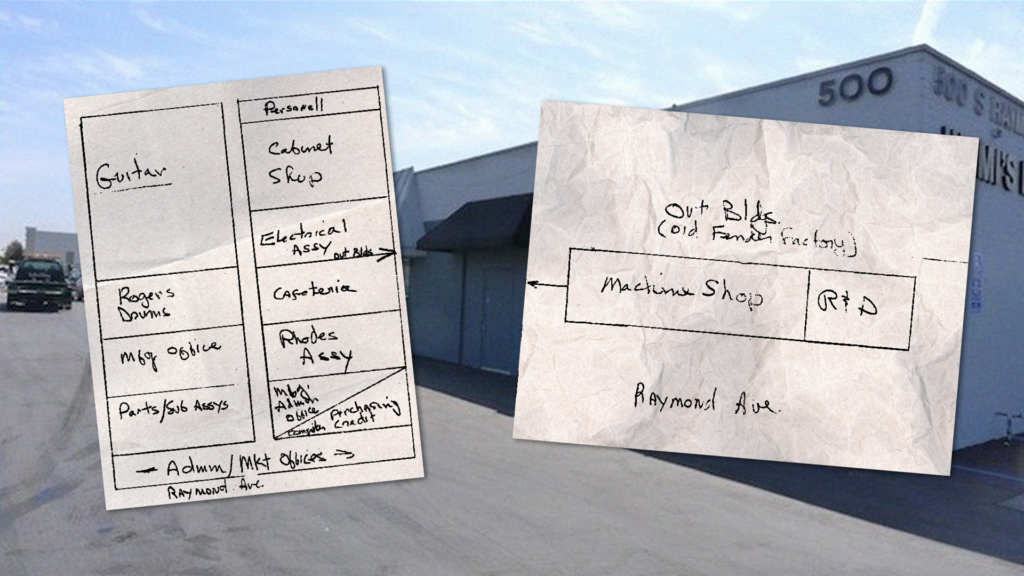
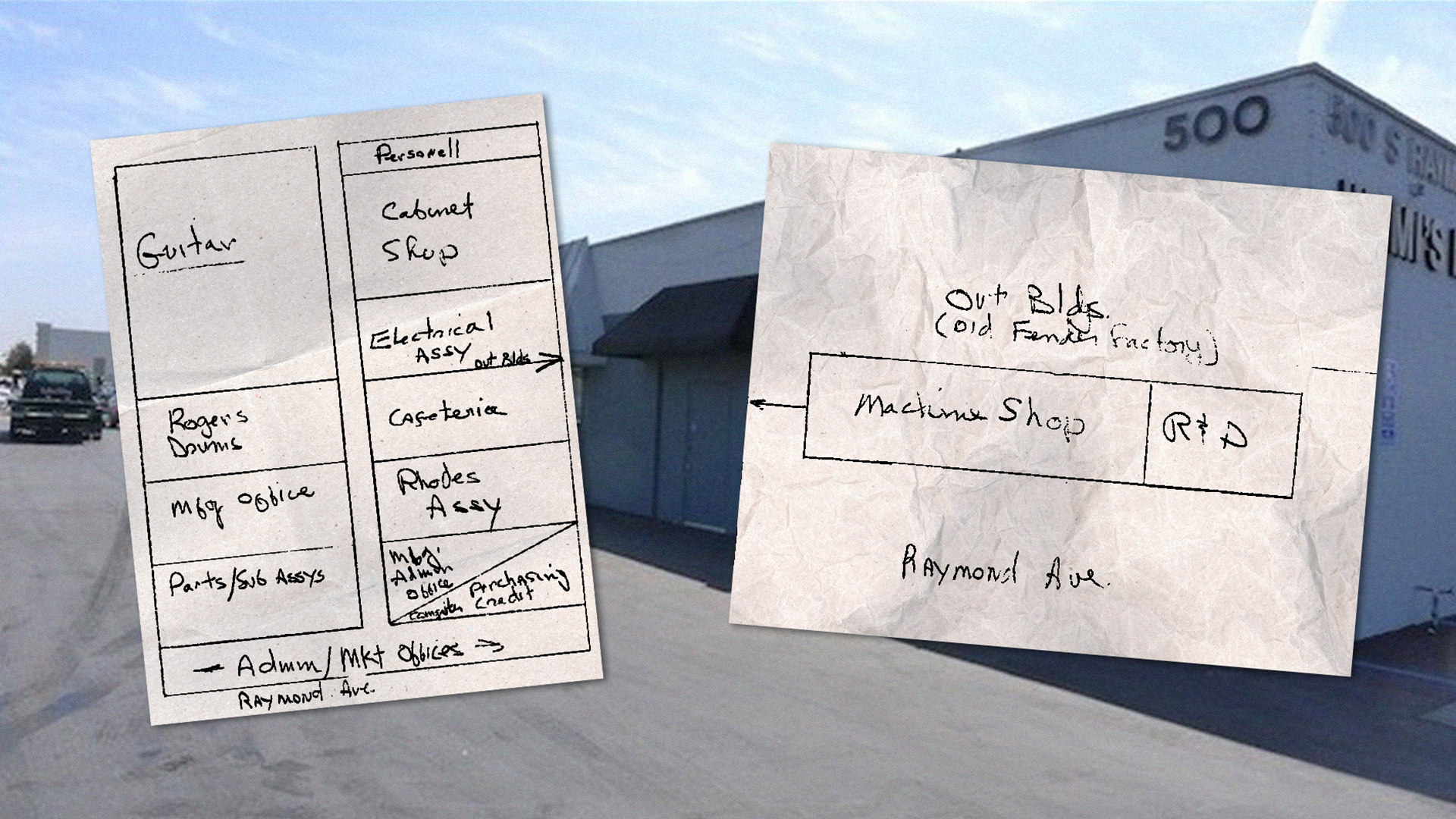
Recently, while discussing the original facility with Rhodes Chief Product Officer Dan Goldman, he found himself drawing a rough map of the buildings, from memory, where he had spent so much of the 1970s.
“I did a very crude drawing of the factory.” Roger explained. As the sketch took shape, so did the memories. “My office is right in here somewhere. Harold [Rhodes] would have hung out here with R&D, and then all the way down here was the metal shop.”
Many of the people responsible for designing, building and refining the piano were musicians themselves. They understood that every Rhodes leaving Fullerton would eventually find its way into a rehearsal room, a recording studio, a club or a concert stage, becoming part of somebody else’s creative life.
That sense of purpose ran throughout the organisation. As Roger puts it, “Even on our worst days, we knew we were making something that people really wanted and would use.”
Looking back, his stories and never before seen photos reveal a side of Rhodes history that never appears in brochures or product specifications. Behind every piano was a collection of talented, passionate and often highly eccentric individuals whose influence extended far beyond their job titles.
“There were a lot of neat people who walked through our halls.”
Harold Rhodes: The Quest for Perfection
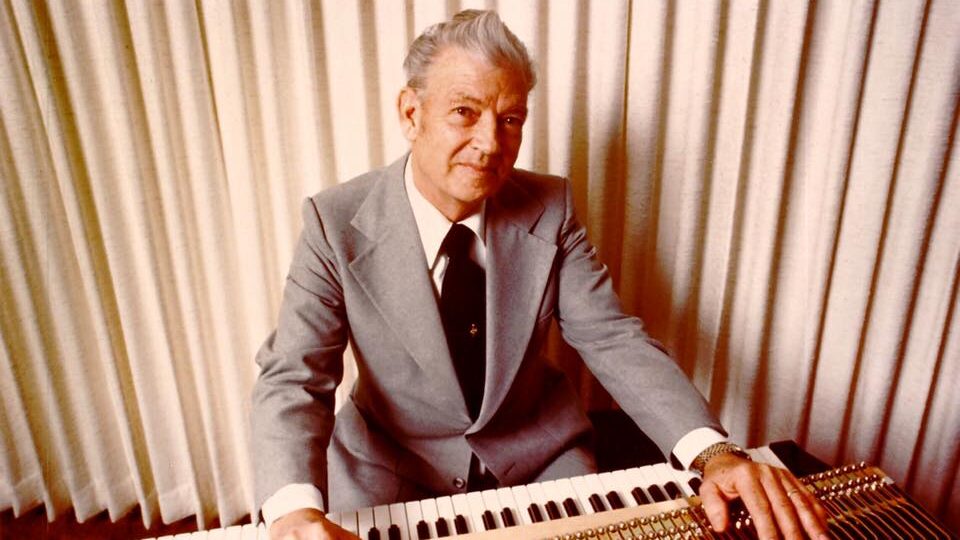
To the wider world, Harold Rhodes is fondly remembered as the in ventor of the piano that bears his name. However, inside Fullerton, he was something else entirely: a constant source of ideas, questions and improvements.
Although Harold wasn’t responsible for running production, he remained deeply involved in the instrument itself and maintained an intense interest in how it was built and refined in line with his vision. To Roger, he wasn’t a distant inventor; he was a colleague.
“Harold would pick at the manufacturing people pretty hard about details, and he wanted everything to be as perfect as possible.”
Hence, throughout the 70’s, countless changes were made to the constituent parts of the Rhodes, including action refinements, tines, pickups, aesthetics and the electronic configurations offered.
That pursuit of perfection occasionally placed him at odds with production realities. Manufacturing teams were responsible for consistency, schedules and output; yet Harold’s attention rightly remained fixed on the instrument and how it might be improved.
Roger often found himself acting as a bridge between those two perspectives.
“He’s trying to make it better in his own way. We’re trying to produce it consistently in our own way. We’re all on the same team, aren’t we!”
Looking back, Roger sees those differences of opinion as an essential part of the process. The tension existed because everybody involved cared deeply about the outcome. Harold’s determination to refine the instrument, even after it had become commercially successful, reflected a mindset shared by many of the people around him.
More Than a Factory
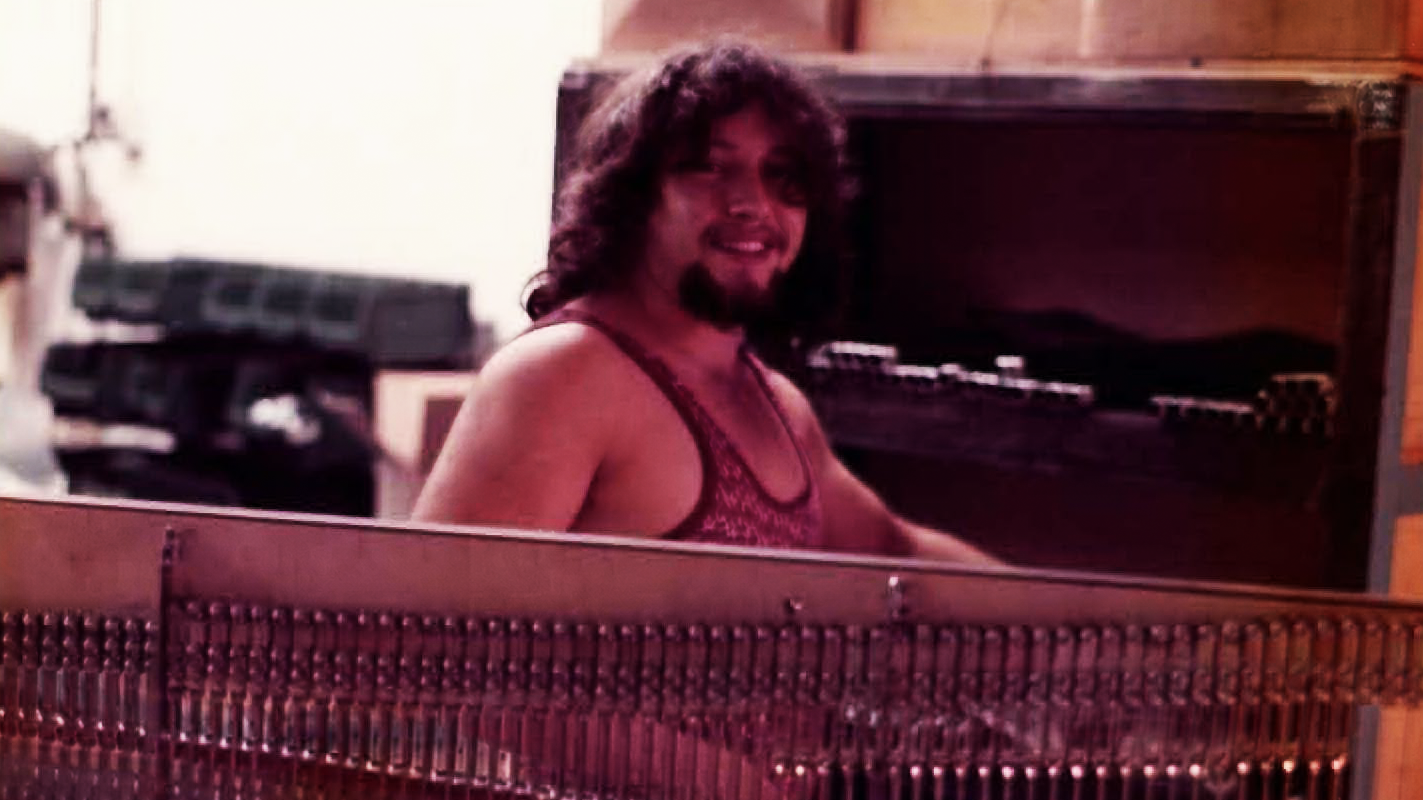
Of all the departments spread across the Fullerton facility, one stands out particularly clearly in Roger’s memory.
“I love the fact that we had a metal shop,” he said. “I loved going back there and hanging out.”
Unlike many modern manufacturers, CBS Musical Instruments maintained an extraordinary amount of capability in-house. Tooling, fixtures, dies and specialised production equipment could often be designed and built within the factory itself, allowing ideas to move quickly from concept to reality.
Roger still laughs when describing them.
“These guys were real, tattooed,” he laughed. “These were like the longshoremen of the guitar/piano business.”
Behind the joke was genuine admiration for a group of highly skilled specialists whose work touched almost every aspect of production. Among them were tooling engineers capable of designing and manufacturing the dies and fixtures needed to create entirely new components and to refine manufacturing, a skillset Roger believes has become increasingly rare.
“Those sorts of guys are as rare as hen’s teeth now.”
If engineering needed a new fixture, a specialised production tool or a manufacturing solution, the metal shop could usually provide it.
“We had guys that could say, ‘I need to make this part,’ and they would actually make the tool that you’d put in the die machine to stamp out that part.”
Looking back, Roger sees that capability as one of Fullerton’s greatest strengths. Problems could be solved quickly, prototypes could be developed internally and improvements could be tested without waiting for outside suppliers. It fostered a culture where craftsmanship and innovation existed side by side.
From Aerospace to Electric Pianos
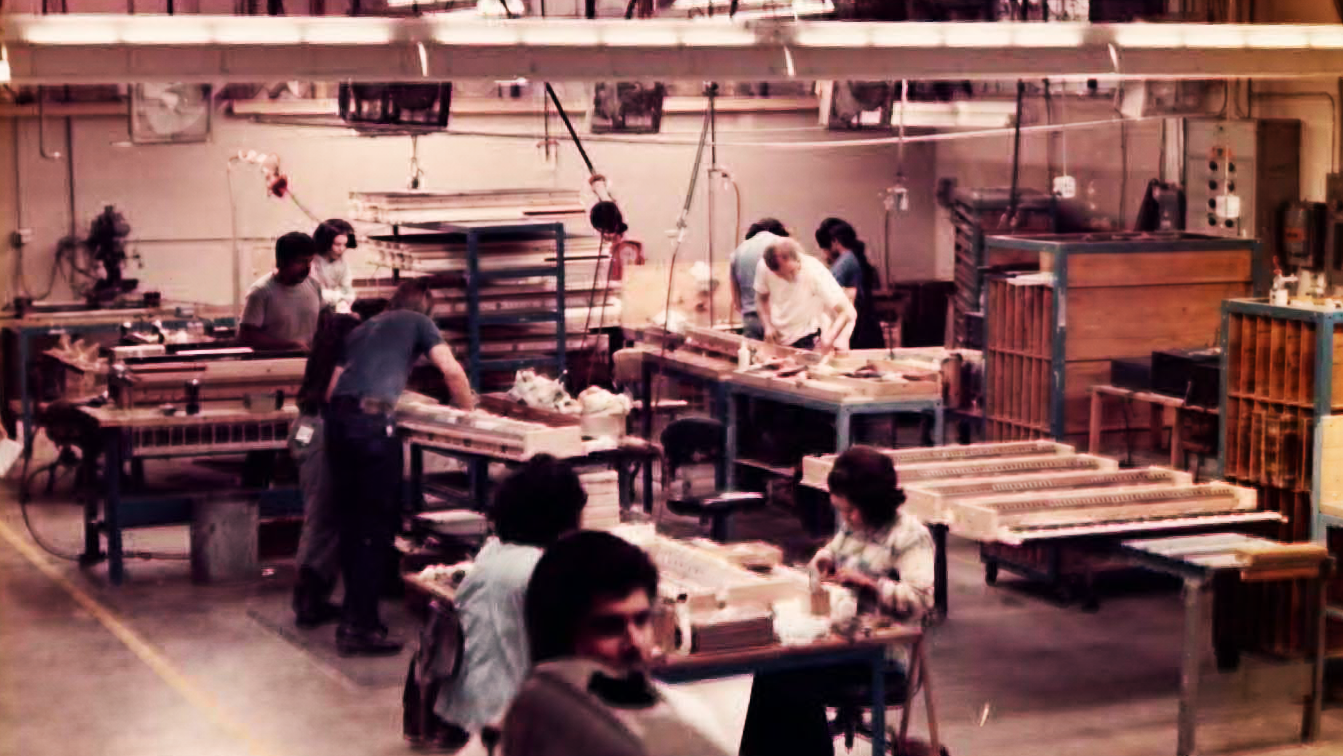
One of the most surprising things about the Rhodes Fullerton factory was the range of experience people brought with them.
While many employees were musicians, others arrived from industries that seemed far removed from electric pianos. Roger remembers a number of engineers who had previously worked for aerospace giant McDonnell Douglas, bringing with them expertise developed during one of the most ambitious periods in American engineering.
One individual in particular left a lasting impression. Gordon Wanamaker, one of Roger’s managers, had worked on technology connected to the Apollo programme.
“Gordon Wanamaker and his team built all the computers that were put in the lunar modules,” Roger recalled. “This guy built the computer that landed the first lunar module!”
On any given day, discussions about electric pianos could involve people whose previous work had helped send astronauts to the Moon.
Among the many talented engineers Roger encountered, few were as widely respected as Horst Absmann.
“Our German Wunderkind.”
Although Horst worked in research and development, his influence extended far beyond his formal role. Whenever a particularly difficult challenge emerged, he was often the person people turned to.
“He was kind of an engineering problem solver.”
In an organisation filled with specialists, Roger remembers how Horst possessed a rare ability to move comfortably between disciplines, understanding both technical challenges and practical manufacturing realities. People trusted him because he could see the bigger picture.
When Engineers Meet Musicians
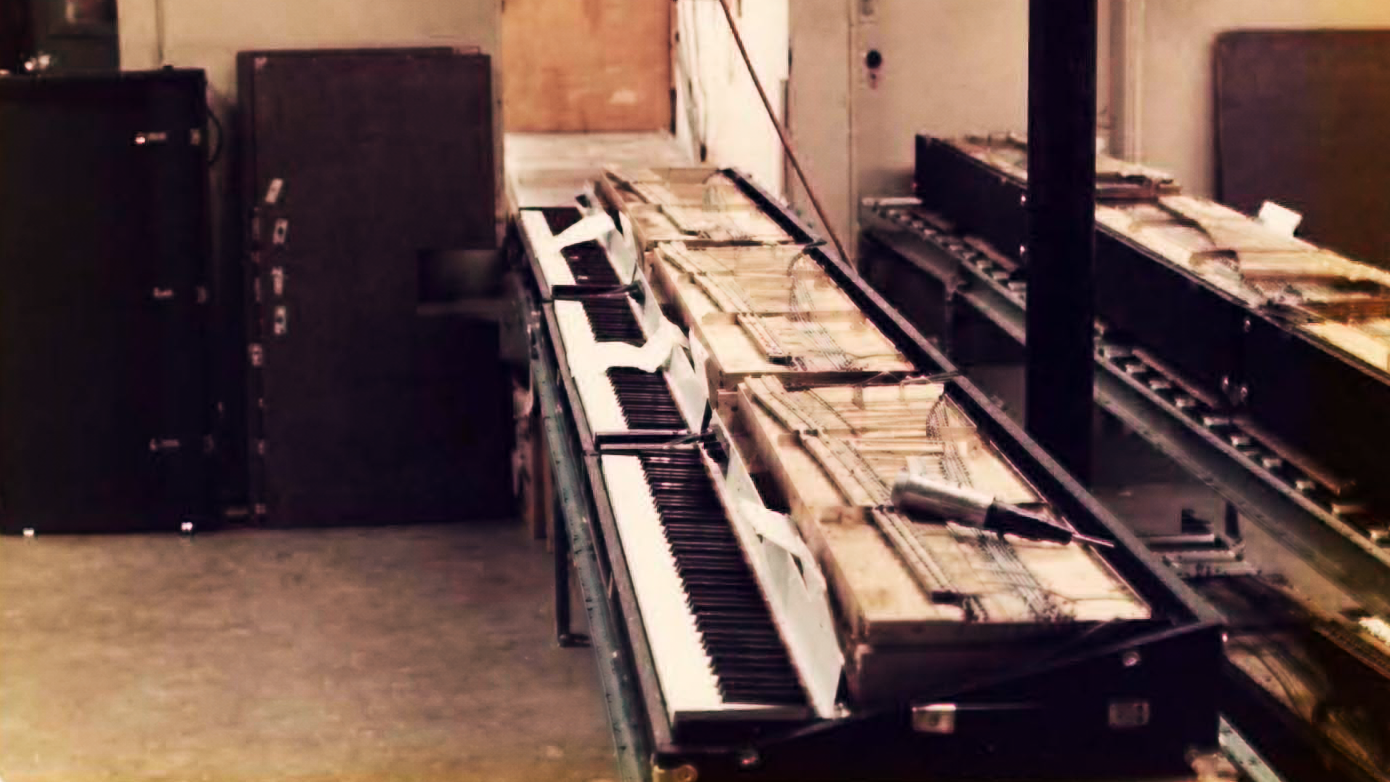
As the instrument’s popularity exploded throughout the 1970s, artists regularly passed through the Rhodes factory. Roger The diversity of backgrounds inside Fullerton was one of its greatest strengths. It occasionally produced moments of comedy too.
Roger still laughs when remembering one engineering meeting during the 1970s.
“We’re all sitting there and this engineer says, ‘I’ve figured out a way to save 16% on the string costs of every guitar.'”
The room waited for the explanation.
“He says, ‘Yeah. We just put five strings on the guitar.'”
Roger shakes his head at the memory.
“An engineer really said that.”
The reaction from the musicians in the room was immediate.
“Three of us in the room were musicians. The other people were engineers. The three musicians just got up and walked out of the meeting.”
The People Behind the Piano
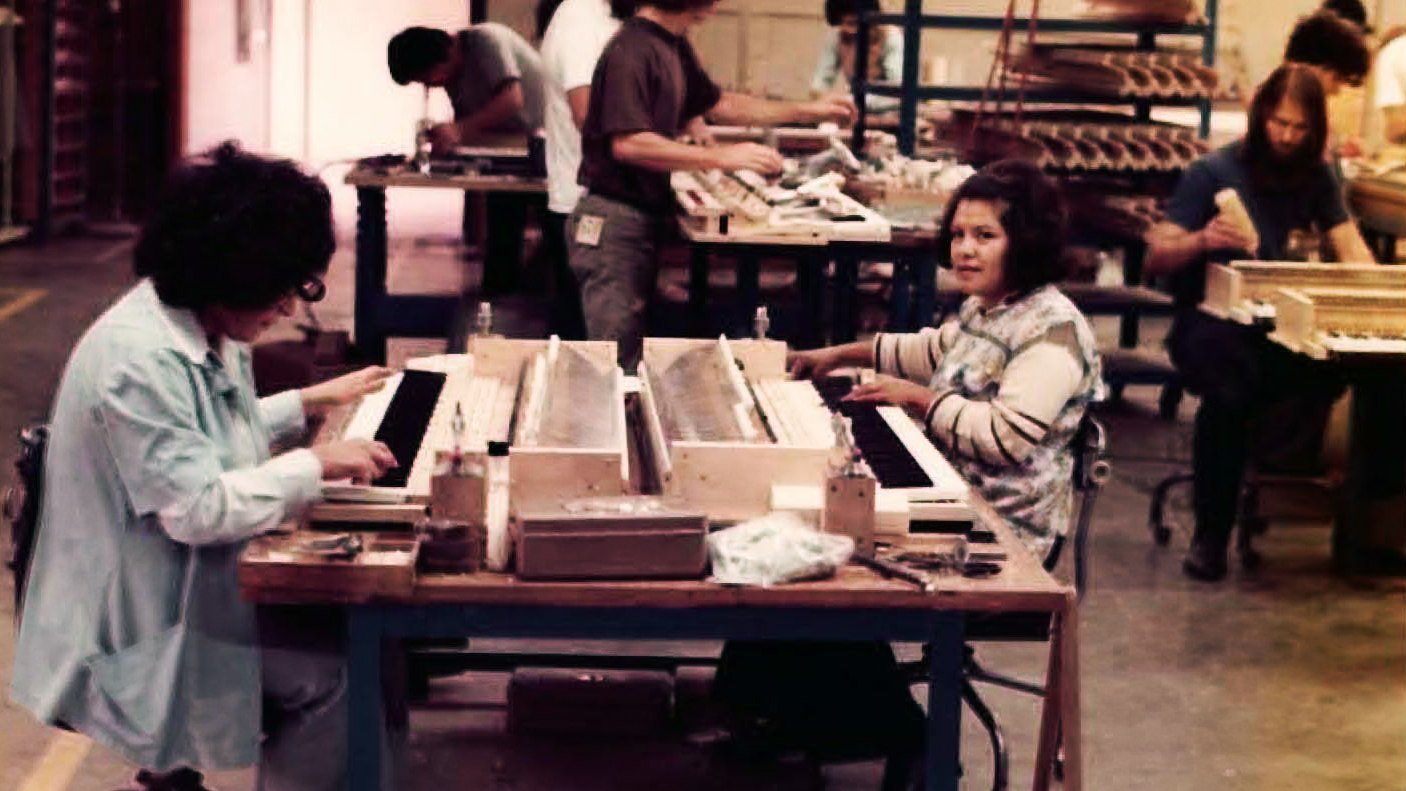
Before arriving at CBS, Roger had worked as a band director in Indiana. Moving to Southern California and finding himself surrounded by musicians, engineers and artists felt like entering a completely different world.
“This beats the hell out of teaching in Fort Wayne, Indiana, in the cold,” he remembered thinking.
The feeling never really left him.
Listening to Roger’s stories today, it becomes clear that his memories of Fullerton are not dominated by production numbers, product launches or corporate milestones. Instead, they return again and again to the people who made the place what it was, and the magical instrument they were creating.
Today, many of those individuals have long since retired. Some are no longer with us. Most never became public figures, and few would be recognised by the musicians who played the instruments they helped create.
Yet their influence remains embedded in every vintage and modern Rhodes piano that exists today. Harold, the engineers, machinists, toolmakers and musicians Roger remembers, all contributed a major part of themselves to an instrument whose legacy continues to resonate eighty years after Harold Rhodes first began developing his original idea.
Asked what he would say to the Rhodes team today, who are responsible for the rebirth of Rhodes with the current MK8 and Stage 61, Roger paused for a moment before reflecting on the importance of carrying that legacy forward.
“You should be taking tremendous pride in what you’re doing,” he said. “You’re keeping a rare creation alive and giving it a new life.
Learn more about the Rhodes MK8/80AE: https://rhodesmusic.com/the-limited-edition-rhodes-mk8-80th-anniversary/