Roger Garvin and Dan Goldman on the Manufacturing Decisions Hidden Inside Every Vintage Rhodes
Former Rhodes General Foreman of Production Roger Garvin joins Rhodes Chief Product Officer Dan Goldman to explore how the Fullerton factory built vintage Rhodes pianos. From tines, tone bars, and keybeds to final assembly, tuning, and quality control, they reveal the manufacturing processes, suppliers, and skilled craftspeople behind the iconic Rhodes electric piano.
Key Takeaways
- Vintage Rhodes pianos were built through a network of specialised sub-assemblies, in-house manufacturing and external suppliers, with final assembly bringing each component together at the Fullerton factory.
- Once the prepared components reached the production line, a Rhodes piano could progress from its cabinet to a fully assembled instrument in around an hour, before final quality control.
- Rhodes shared parts, workshops and manufacturing resources with the wider CBS/Fender operation, including cabinets, hardware and components originally developed for other musical instruments.
- Fixtures and jigs helped maintain consistency across large-scale production, while skilled technicians handled critical processes including tuning, voicing, action setup and final inspection.
- At peak periods, the Fullerton factory could produce up to 800 Rhodes pianos per week, combining efficient manufacturing systems with the experience and craftsmanship of the people behind the instrument.
For most Rhodes enthusiasts, there comes a point where curiosity takes over. Much like opening the bonnet of a classic car, removing the harp cover from a vintage Rhodes reveals the timeless ingenuity of Harold Rhodes and the Fullerton factory team: the harp, tone bars, pickups, dampers, hammers and tines that together create one of the most recognisable sounds in modern music.
Beneath the harp cover is an instrument quite unlike anything else in keyboard design. Every component raises another question. Where did it come from? How was it made? How did the Rhodes factory in Fullerton produce so many pianos (circa 250,000 units) during the instrument’s original production era?
When former Rhodes General Foreman of Production Roger Garvin recently sat down with Rhodes Chief Product Officer Dan Goldman, the conversation quickly moved beyond nostalgia and into the realities of manufacturing.
Together, they explored something rarely documented in detail: how a Rhodes piano actually moved through production during the instrument’s most prolific years in manufacturing, and how that relates to Rhodes production in the modern day.
What emerged was a fascinating picture of an instrument that was never really built entirely in one place.
More Than a Production Line
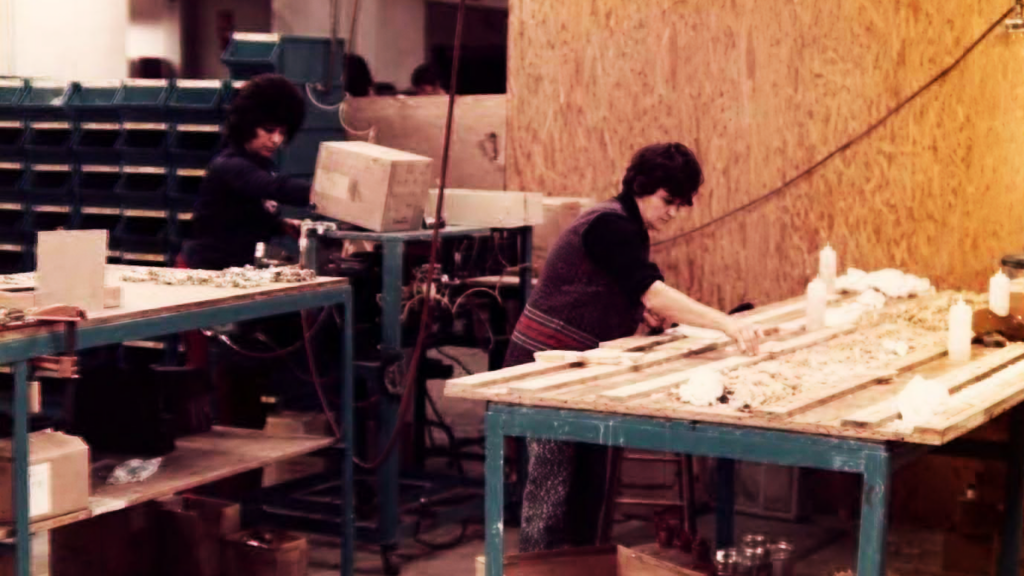
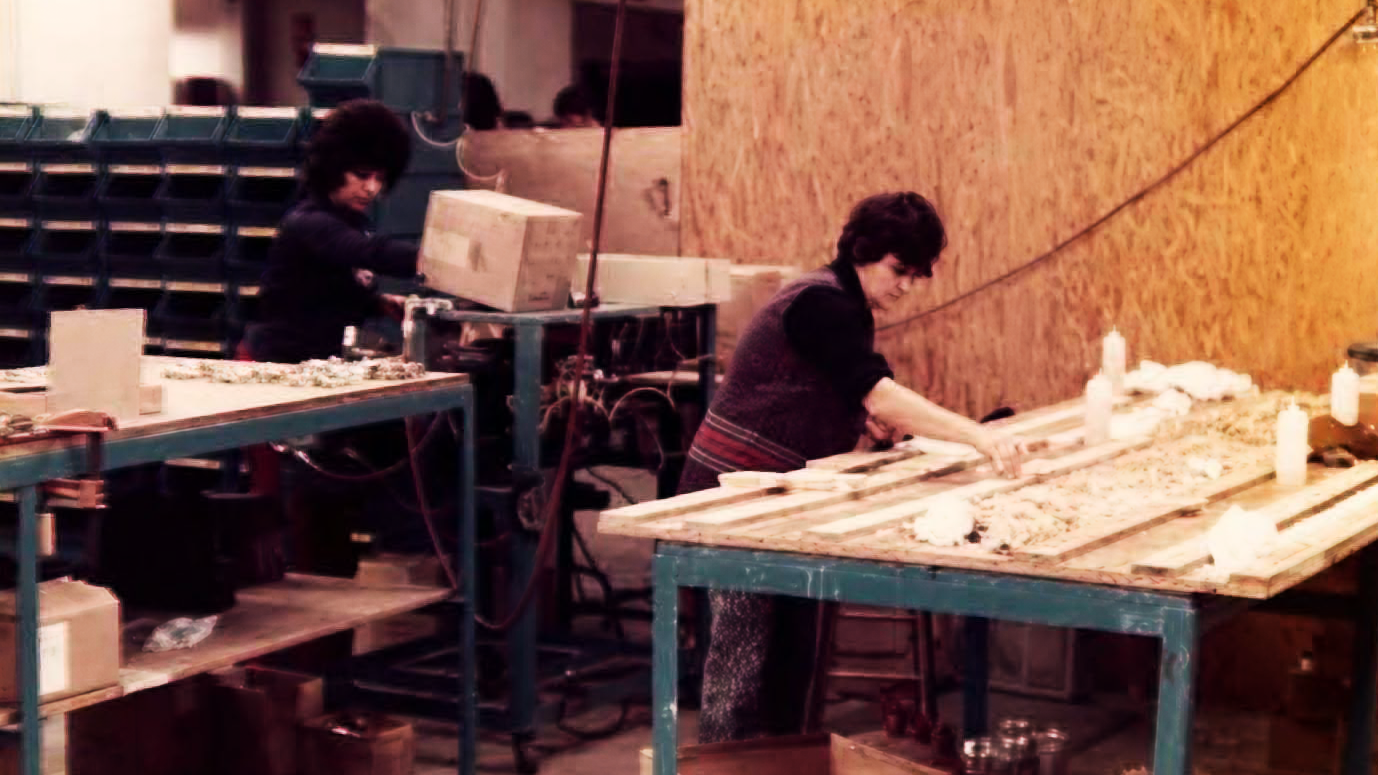
Many people imagine a Rhodes being built piece by piece as it moves down a factory line. In reality, by the time a piano reached final assembly, much of the crucial work had already been completed elsewhere. Tines, tone bars, grommets, screws, washers, pickup rails and key assemblies all arrived as prepared sub-assemblies, either built off-line within the factory or sourced from specialist external suppliers.
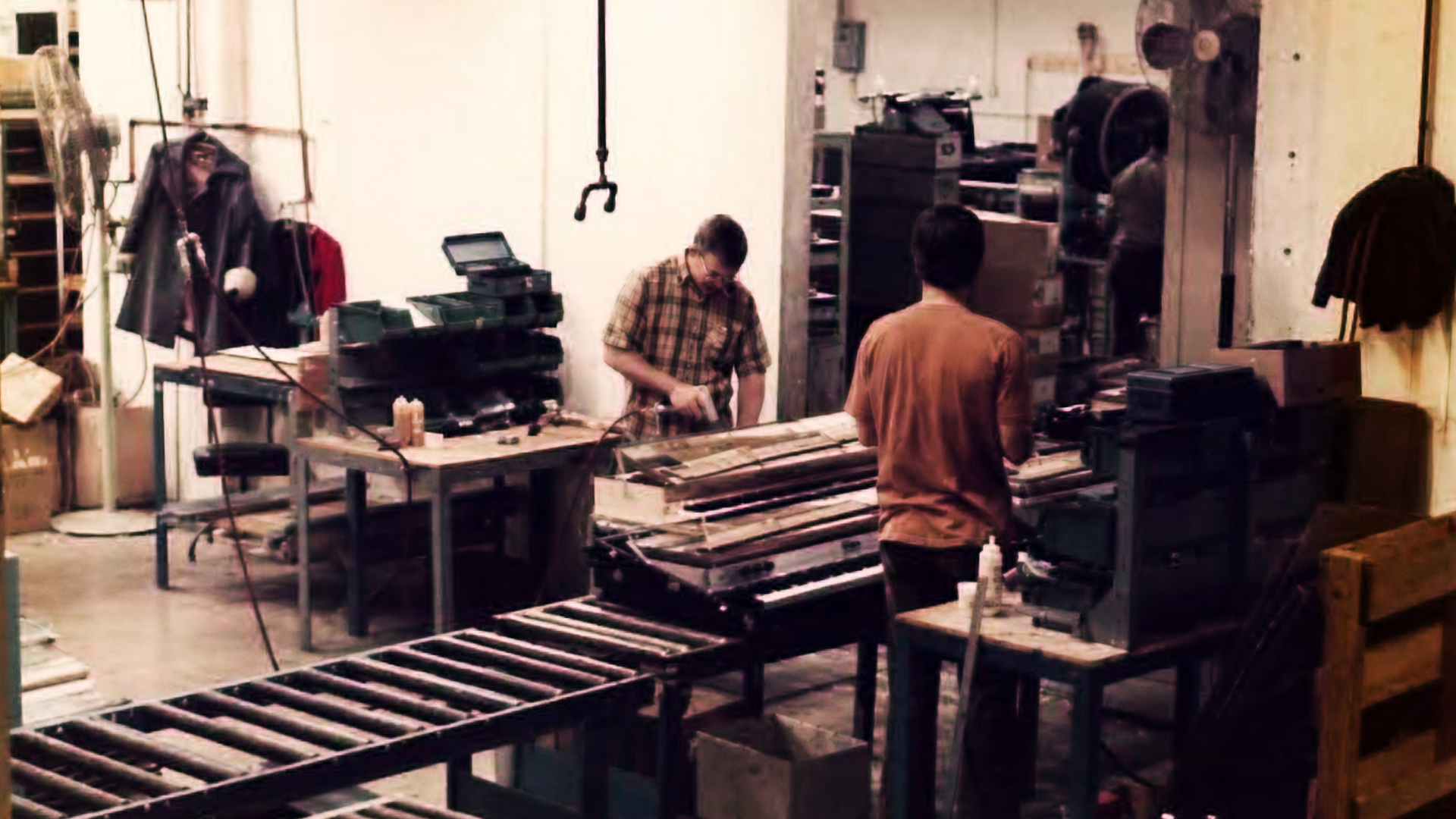
“The final piano assembly line was just one straight shot,” Roger recalled.
The main assembly process was relatively simple. A tolexed cabinet from the in-house cabinet workshop (shared with Fender guitar amps) entered the rolling line first, followed by a pre-regulated Pratt-Read keybed. Next, the harp supports were added, along with the action rail (with hammers and dampers already pre-installed). Finally came the harp assembly (with tines, tonebars and pickups pre-installed) to complete the piano. From there, the piano moved through to final voicing, tuning, action/damper testing and overall quality control before being boxed and shipped.
The speed was remarkable.
“I would say, it took right around an hour from the time the case hit the rolling production line to a fully assembled piano [excluding quality control].”
By that stage, however, much of the piano had already been built elsewhere in the factory.
“A lot of sub-assemblies were already done.”
The harp, front panel/suitcase electronics (including fully tested and populated pickup rails), tolexed cabinets, regulated keybeds and countless smaller components all arrived at final assembly having already passed through other departments, suppliers and specialist production areas. Rather than building a piano from raw materials, the Rhodes line acted as the meeting point for dozens of separate manufacturing processes and pre-prepared assemblies.
Parts storage alone occupied a significant area of the operation.
“That’s where the thirty-six thousand parts – screws, nuts, bolts, boards, frames, key beds, all of that stuff was stored.”
Listening to Roger describe the production system, it becomes clear that a Rhodes piano was the product of a well-oiled and efficient manufacturing ecosystem, rather than just a single assembly line.
Cabinets, Tolex and the Fender Connection
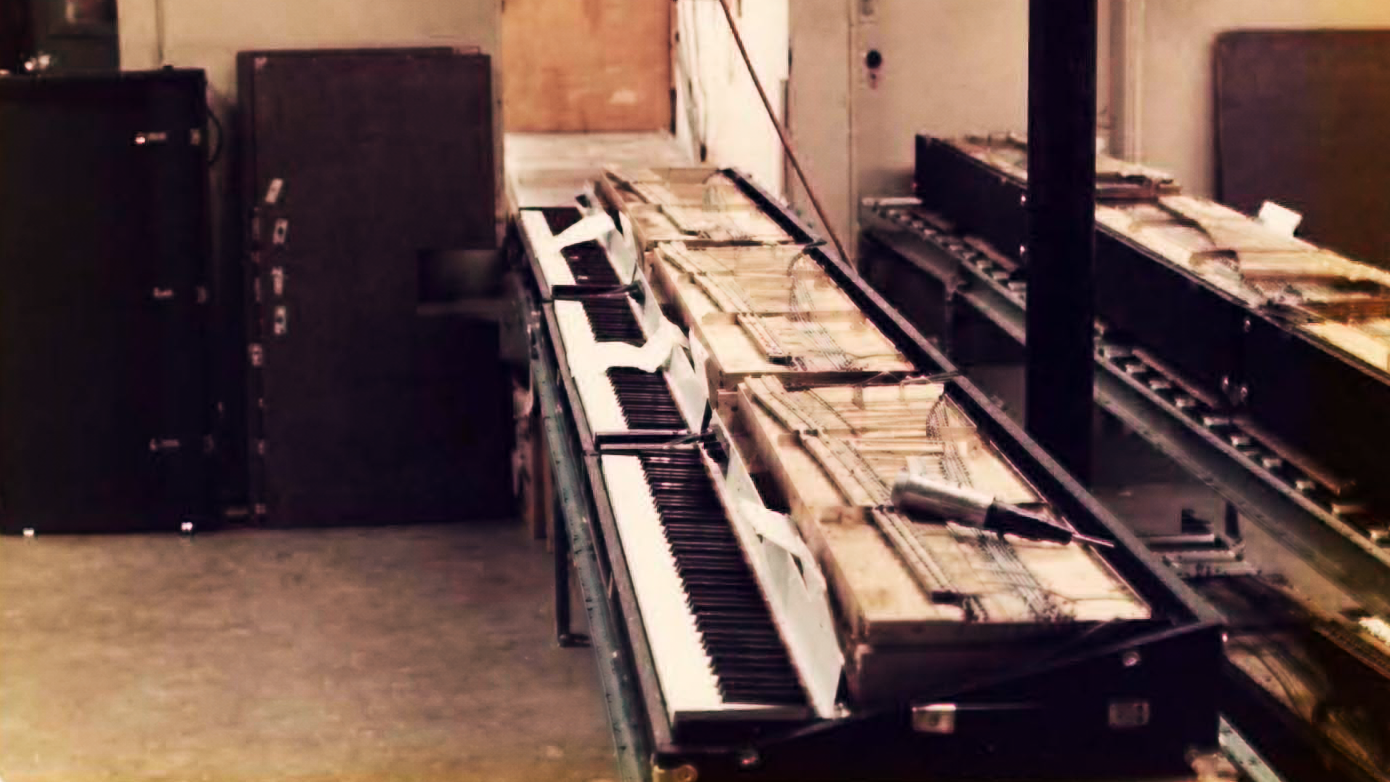
One of the clearest examples of that ecosystem was the cabinet shop.
Today, it’s easy to think of a Rhodes Stage or Suitcase cabinet as a specialised component designed solely for the piano. During the CBS years, however, it was simply one product among many moving through the wider CBS/Fender operation.
“I didn’t really have much to do with the cabinet making’ Roger explained. “Because that was done in the cabinet shop, where they built the Fender amplifier cabinets for Twin Reverbs, Deluxes and the Bassman.”
Notably, Rhodes-specific cabinets represented only a small percentage of the cabinet department’s overall workload.
“Rhodes cabinets were around 15% of their total workload.”
Production was organised in batches. The cabinet workshop might spend one week building Fender amplifier cabinets and the next producing Rhodes enclosures.
“They would do a run of Suitcase cabinets, and then those would sit in stores waiting for the production line.”
Before leaving the department, each cabinet was inspected for covering quality, glue joints and general finish. Like many aspects of Rhodes production, it was a craft that often goes unnoticed, despite playing a crucial role in the finished instrument.
An Ecosystem of Suppliers
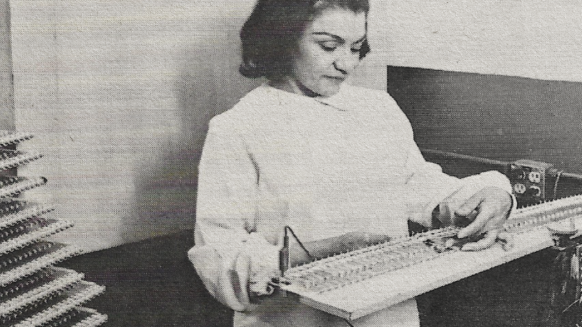
The deeper Roger and Dan dug into the manufacturing process, the clearer it became that Rhodes relied on a mixture of in-house production and specialist suppliers.
“Pratt-Read, was the main keyboard supplier.” Roger recalled. Dan noted that Wurlitzer also provided keybeds for Rhodes too.
Much like the Leeds Rhodes factory today, stacks of completed keybeds would arrive ready for regulation and installation, and were stored alongside racks of cabinets built in-house.
Roger remembered one detail Harold Rhodes particularly appreciated.
“I remember [Harold] Rhodes always being pleased that the keys were made from sugar pine. Because it had the required strength, yet the lightness to make the action work.”
Other assemblies followed a similar pattern. Dan pointed out that many vintage pickup rails carry the familiar TBJ stamp, generally associated with the company Tur-Bo Jet, who are still in existence today.
“The pickup rail came as an integral piece that got dropped into the harp,” Roger explained.
The result was a manufacturing model that blended external expertise with in-house capability, allowing Rhodes to scale production while maintaining consistency.
Tone Bars, Harp Frames and the Metal Shop
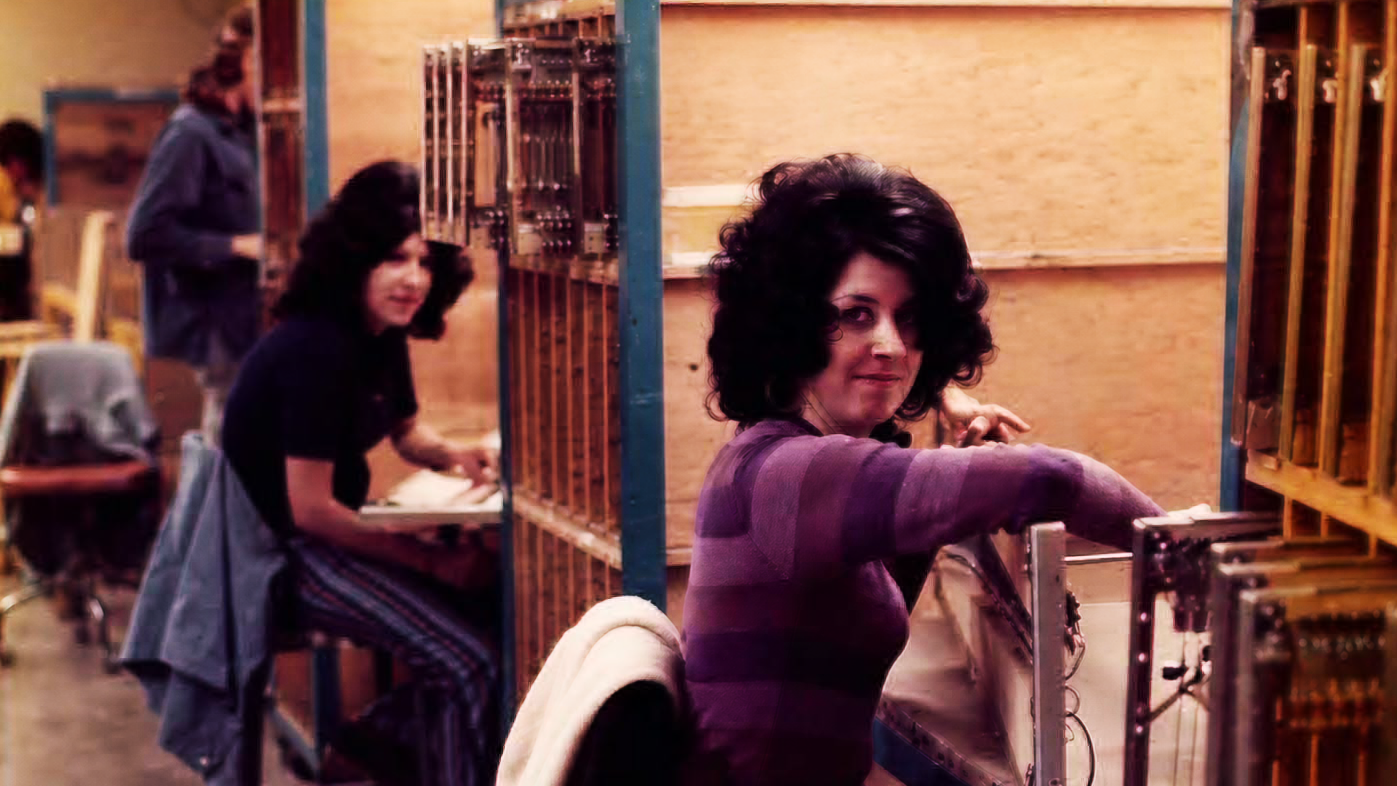
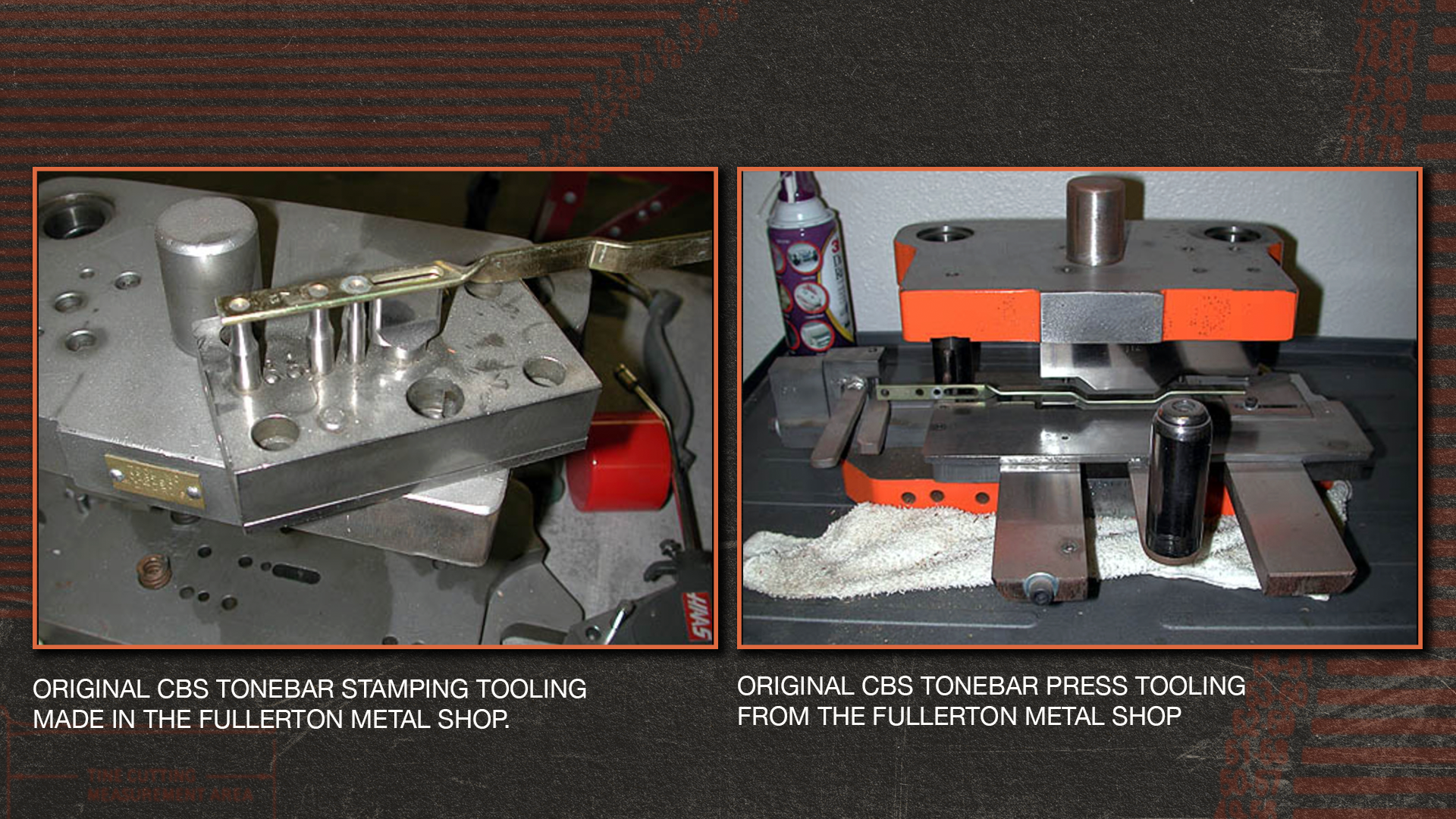
Not everything came from outside suppliers. Roger vividly remembered the metal/machine shop producing many of the parts that would eventually become the instrument’s tone-generating system.
This capability gave CBS/Rhodes considerable flexibility, but it also created constant decisions about what should be manufactured internally and what should be purchased elsewhere.
“The purchasing department was like a four-man staff. And they were grinders. They constantly evaluated making in-house-vs-buying externally.”
Every component became a balancing act between cost, quality and supply reliability.
“Can we buy it outside better than we can do it inside? Or is inside going to be the better choice because of the way we can buy material?”
Borrowed Parts and Shared Resources
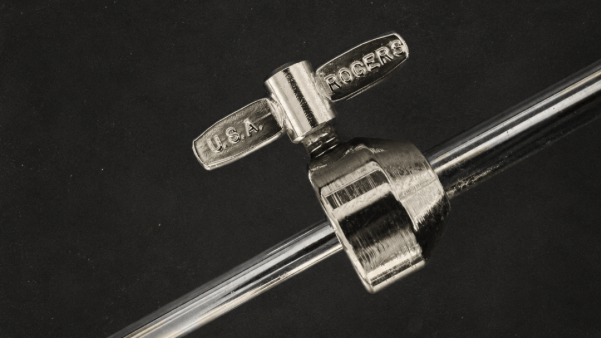
One of the more surprising parts of Roger and Dan’s discussion concerned how often Rhodes borrowed parts from elsewhere within the CBS/Fender Musical Instruments family. Handles and protective corners came from Fender amps, whilst the mid 70’s Stage Piano knobs were also used on the Fender Blender distortion pedal.
Dan pointed out that the Stage piano sustain pedal rod also originated as a drum component.
Roger immediately recognised it.
“Yep. It was a hi-hat connector!”
Other crossover parts existed as well.
“I think there was a part in there that was part of the Accusonic Timpani as well.”
Dan also noted that the Mark 1 and Mark 2 Stage piano legs shared DNA with Fender pedal steel guitar leg hardware.
For modern enthusiasts, these details help explain why certain Rhodes components feel simultaneously unique and familiar. The instrument evolved within a much larger manufacturing environment, benefiting and borrowing from decades of tooling, engineering and production knowledge already present across the wider organisation.
Fixtures, Jigs and Human Skill
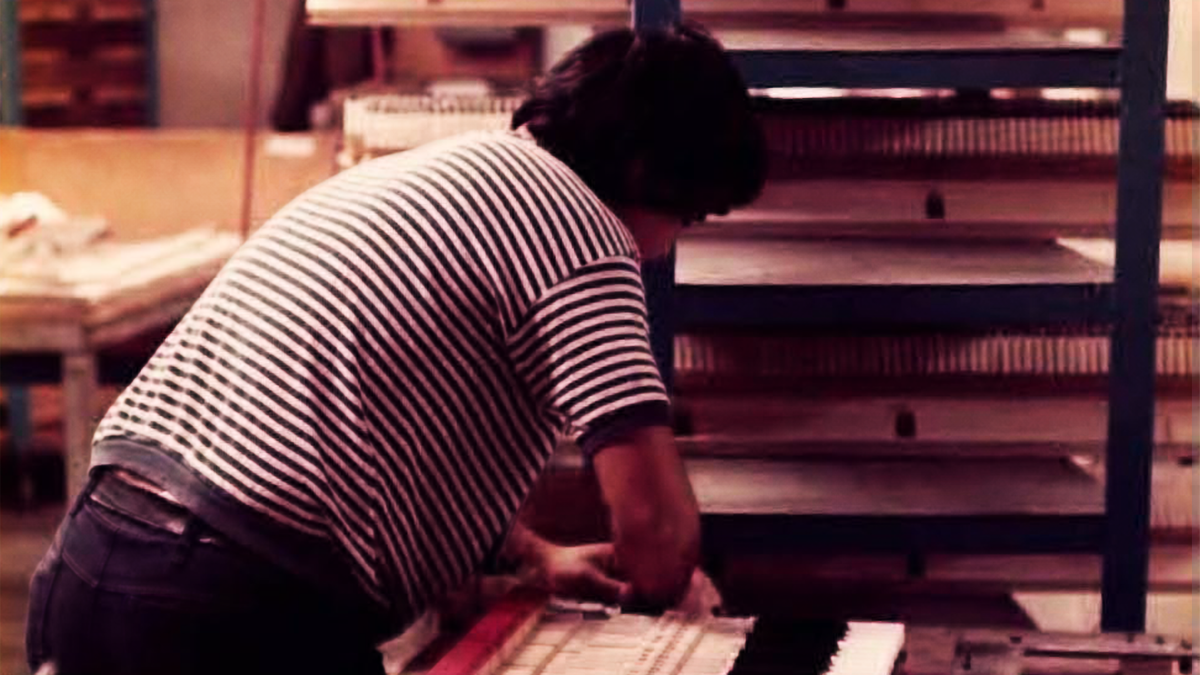
One of the most revealing parts of the conversation centred on consistency. How do you build thousands of Rhodes pianos without CNC machining, laser measurement systems or digital production tools?
Roger’s answer was straightforward: fixtures.
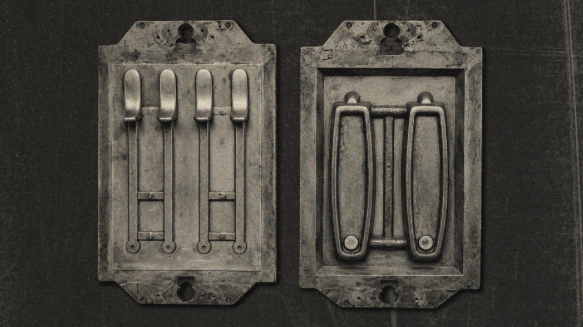
“For setting most parts, there would be a fixture that went in place, and for tines and pickups you just screwed it down to the fixture, and that set the appropriate pickup distance and tine height. CBS brought in professional manufacturing engineers who understood factory systems and fixture-based production”
Dan asked whether Roger had helped develop these systems.
“That was all set up before I joined Rhodes in 1970.” Roger explained, noting, “if it required a change, then it would have been Harold and the engineer assigned to that.”
The philosophy was identical to that used elsewhere throughout Fender production.
“Whenever you could use a fixture or a guide in manufacturing in those days, you would. It was the same with hand-routing the guitar bodies. There was a fixture for each Stratocaster, and Telecaster.”
The fixture established consistency. Human skill completed the process.
Tuning by Hand
Even with fixtures establishing alignment, the final stages of production still heavily relied upon experienced hands and ears.
“The tuners sat with a [Peterson] tuner, and they knew what pitch each key was supposed to be.”
The process itself was entirely manual, note-by-note, as is still the case today at Rhodes.
“They would just reach in and move the spring!”
In the modern day, it’s easy to forget how much vintage Rhodes production depended- and still depends- on skilled technicians rather than automation. Every instrument passed through the hands of people who understood how it should feel, sound and respond, and those same principles continue to resonate today inside the modern Rhodes factory in Leeds.
Technology can provide consistency and efficiency, but experience provides the essential judgement and nuance.
The Tone Block Problem
Among all the manufacturing challenges Roger remembered, one stood above the rest.
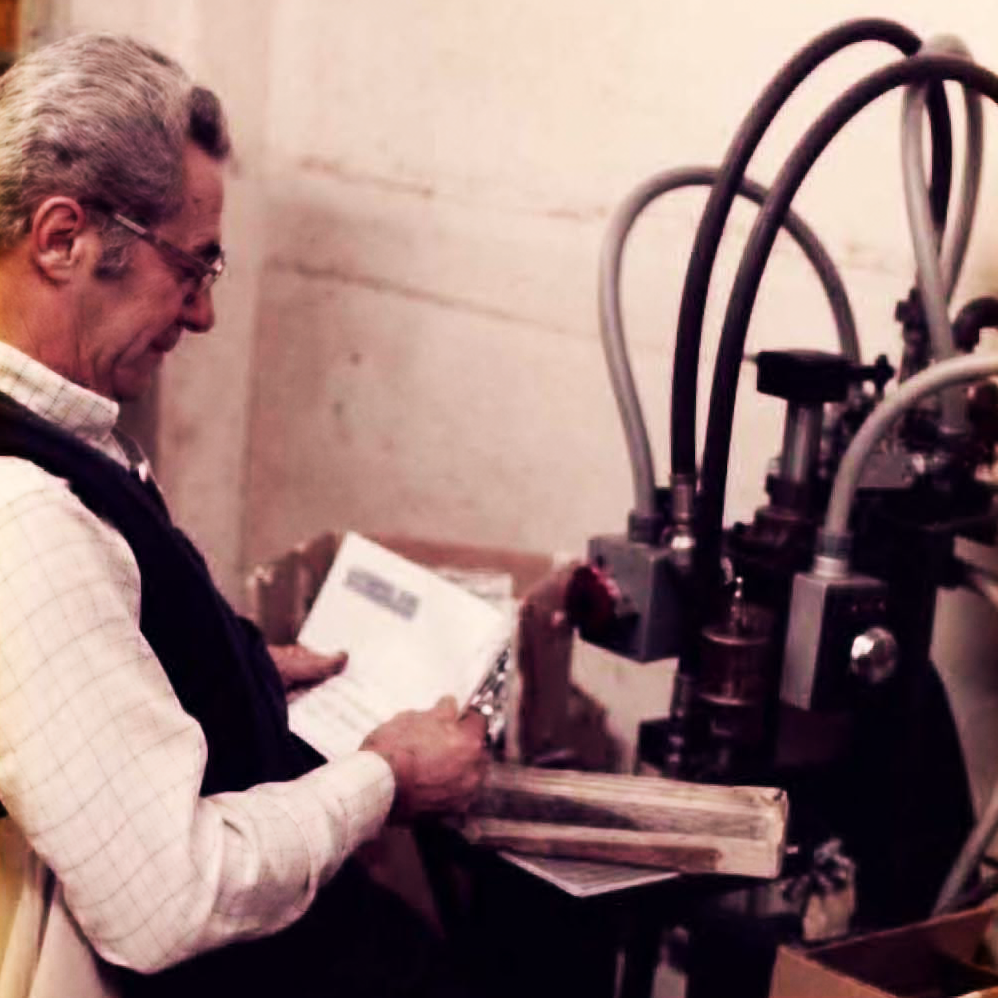
“The worst thing we had to deal with were the tines in those damn tone blocks!”
Dan immediately knew what he meant. The problem wasn’t always the tine itself but rather, the tine block cracking when the tine was pressed into position.
“We’d get a batch of those things in (blocks), and they’d start pressing the tines in, and the block would crack at the end.” Roger explained. “They tried all kinds of things. They tried tine sintering and different kinds of block hardening and so forth.”
Yet bad batches still appeared.
“At our level of sophistication, it was: ‘ Hey, this is a good batch. Hey, this isn’t a good batch. Quality control implemented visual block inspection and batch sampling, so if 20 out of 100 blocks cracked, entire batches were rejected”.
Dan recognised the issue instantly from a modern perspective: “If the blocks are over-hardened , when you press the tine, it’ll either split the block, or you’ll get the hairline cracks, and then the tine won’t ring properly.”
The consequences rippled through production at the Fullerton factory.
“Then you’ve got guys putting key beds in cases and stacking those up, waiting for the tines and tone bars.”
“I don’t remember during my tenure at Rhodes that the issue ever got worked out.”
It is exactly the kind of hidden production story that rarely appears in official histories, yet played a significant role in the day-to-day realities of building Rhodes pianos.
Final Checks
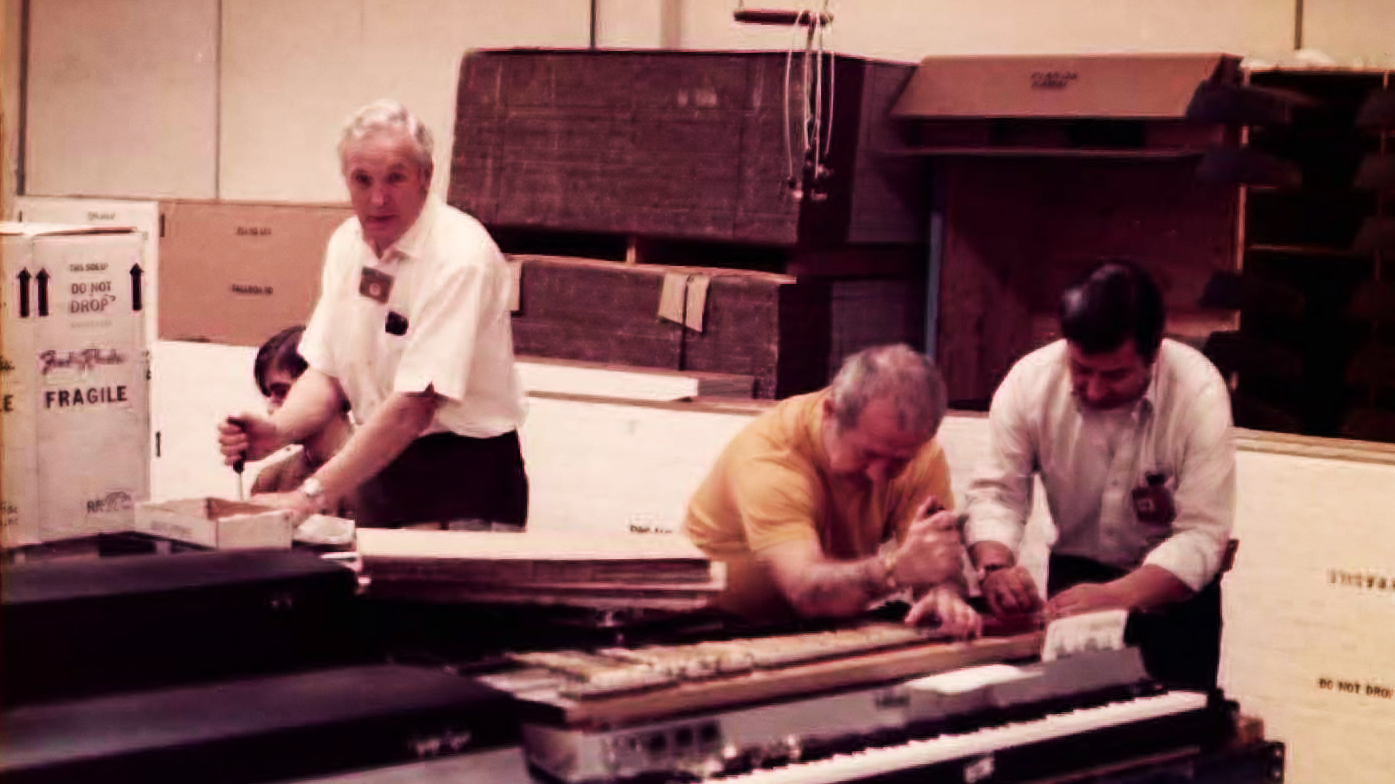
Before a piano left Fullerton, it faced one final inspection. Amongst the end-of-line inspection team, legendary Rhodes figures Buz Watson (Rhodes Final QC Inspector) and Bob Kehoe would be stationed, signing off pianos and leaving their name stamps indelibly on the piano harps they signed off.
“There was a quality control department, with a staff of quality control engineers, factory-wide. There would be an inspector that reported to quality control who had enough playing ability and enough knowledge of what the piano was supposed to do.”
Every aspect of the instrument was evaluated: electronics, damper function, sustain, action, and controls, whilst tuning and final voicing took place in an isolation booth. However, if something wasn’t right, it would be sent back for re-work.
Roger remembered a similar culture throughout the operation.
“They did not put up with just anything. They took pride in that.”
Getting the Last Pianos Out
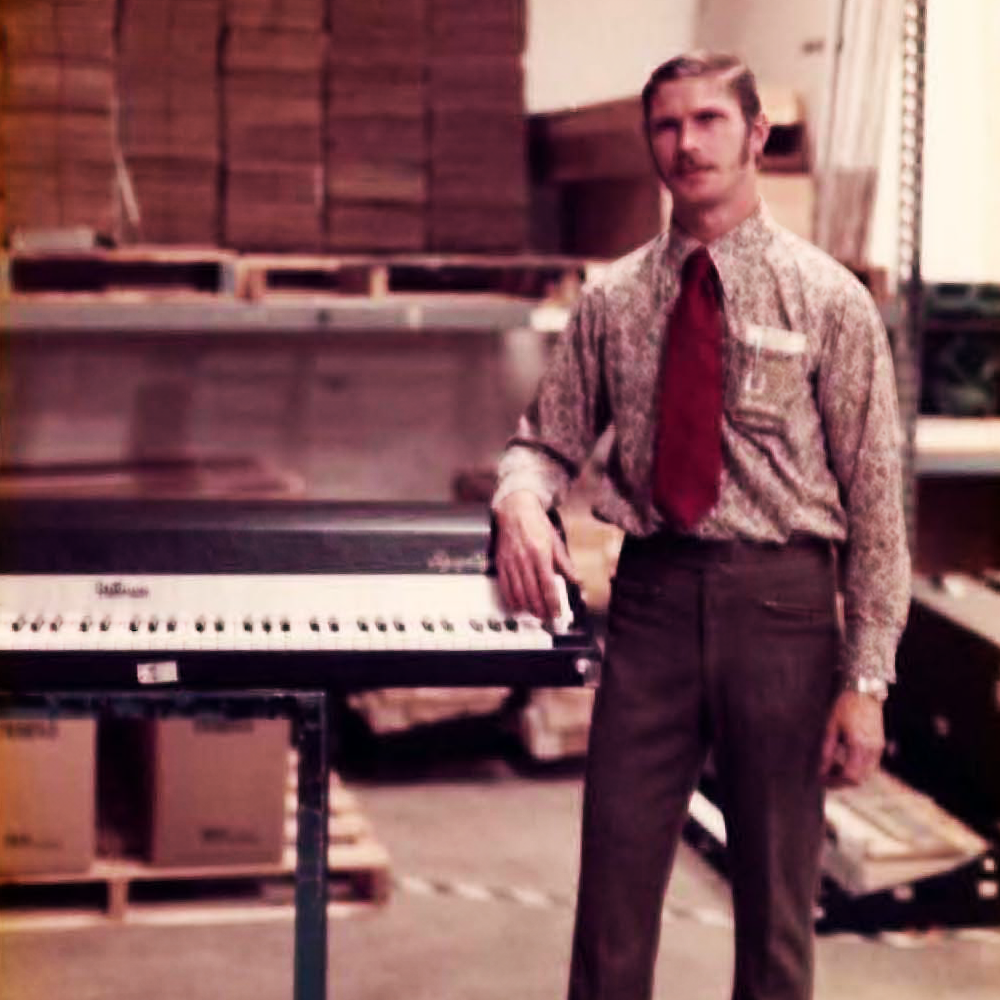
For all the discussion of suppliers, fixtures and production systems, Roger is quick to point out that Rhodes manufacturing ultimately depended on people.
One of the factory-floor characters he remembers most vividly was Rhodes Line Foreman, Ron Roscom.
At peak production, and with demand for Rhodes pianos growing massively, the Fullerton factory at times pushed production to as many as 800 Rhodes pianos per week. (However, the general run-rate was around 50/60 pianos per-day, equating to around 300 pianos per-week on average). Meeting such high targets required organisation, experience and, occasionally, a certain amount of stubborn determination.
Roger remembers Ron having plenty of all three.
“He was a balls-to-the-wall, put-your-head-down-and-get-it-done kind of guy.”
During particularly busy stretches of production, Ron would even put his own Rhodes-specific skills to use and jump into the tiny soundbooth alongside end-of-line inspectors Buz Watson and Robert Kehoe, helping with final adjustments himself if it meant keeping instruments moving out the door.
“Nothing would stop him from getting pianos out!”
One memory in particular still makes Roger smile. Following a desert motorbike accident, Ron arrived at the factory heavily bandaged.
“Ron was taped up from top to bottom, like he’d been in a car accident.”
Yet he was still there, pushing production forward.
At the end of each week, the numbers mattered. Roger recalled, “the weekly output could come in at 793, and Ron would figure out how to get the other seven made.”
For Roger, people like Ron embodied the spirit of the operation. The systems, tooling and processes mattered, but ultimately it was the determination of the people behind them that kept the line moving.
80 Years On
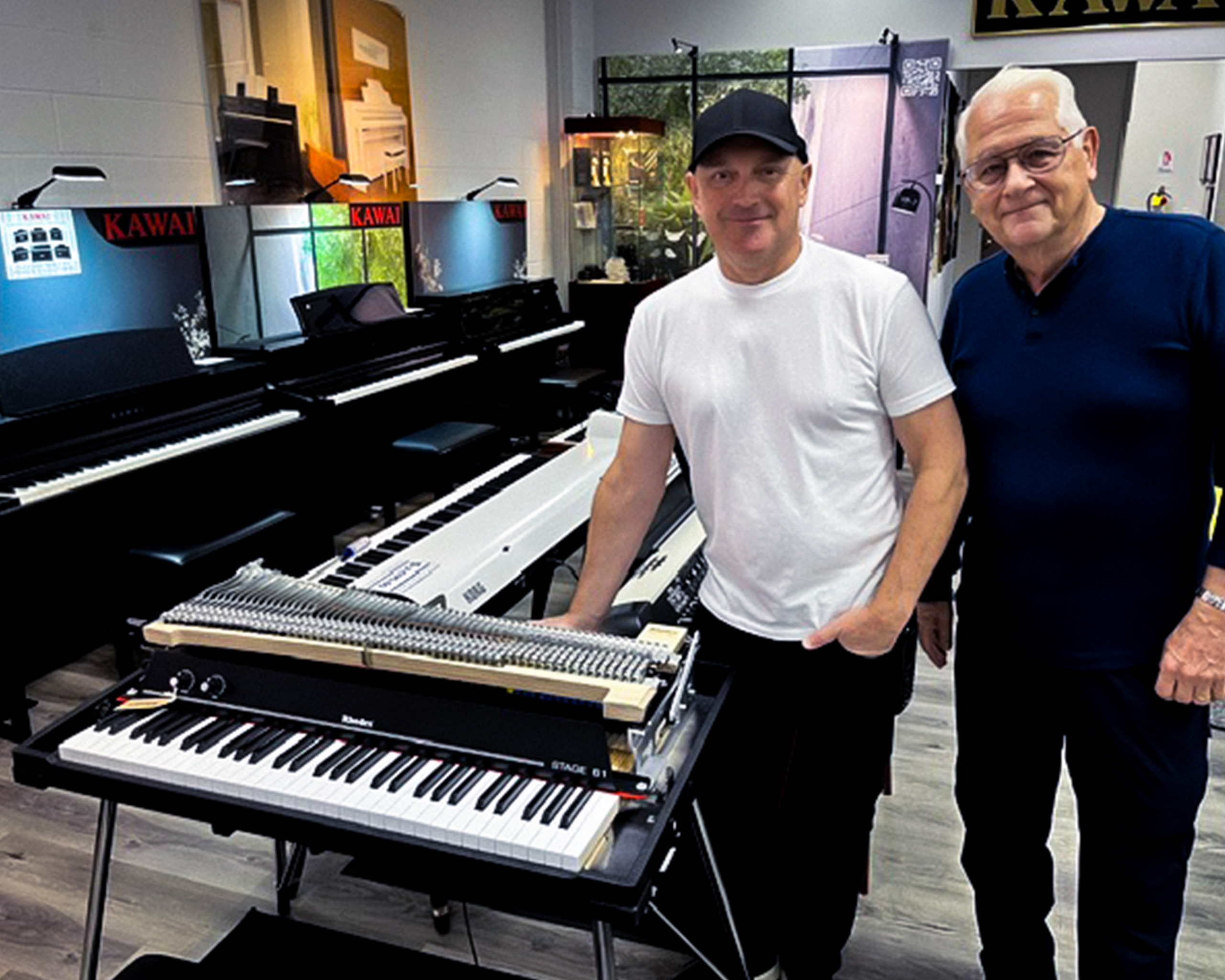
Listening to Roger and Dan compare notes across half a century of Rhodes history, one thing becomes abundantly clear. Rhodes was never simply a collection of parts. It was the result of suppliers, finance departments, engineers, cabinet makers, machinists, quality control specialists, assemblers and musicians, all contributing their expertise to an instrument that remains uniquely complex even today.
And despite spending years overseeing their production, Roger still finds himself marvelling at the fundamental ingenuity of Harold’s design and had some final words before signing off:
“Well, thank you Dan. It’s been a real joy and it’s been exciting following you guys from afar and seeing what you’re doing with the Rhodes today. Please express my gratitude to the rest of the team for what they are doing. It’s a really special thing, you know, a truly special instrument.”
Learn more about the Rhodes MK8/80AE: https://rhodesmusic.com/the-limited-edition-rhodes-mk8-80th-anniversary/