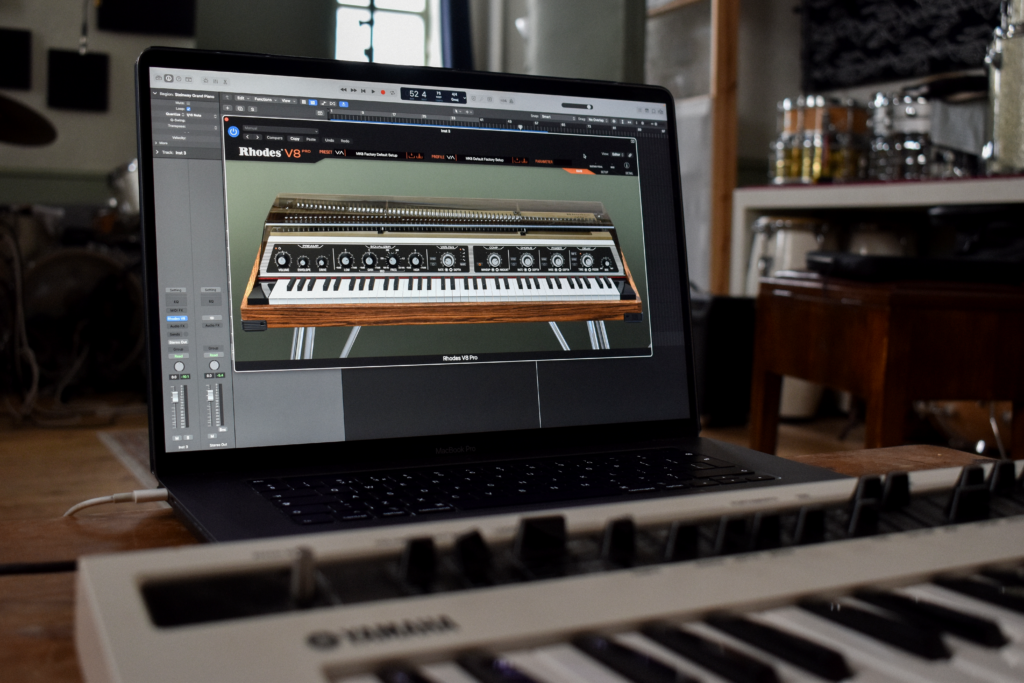
With Its Unmistakable Tone, the Clavinet D6 Helped Define the Sound of the ’70s
The Hohner Clavinet is an electromechanical keyboard known for its distinctive sound. Its defining feature is a sharp, percussive attack that delivers a snappy bite that effortlessly cuts through mixes. This unique tone made it ideal for rhythmic stabs and funky grooves, letting keyboardists emulate a guitarist’s role in an ensemble and inject the Clavinet’s iconic character, energy, and emotion into tracks across eras.
More than fifty years since its peak popularity, the Clavinet remains iconic across genres such as funk, soul, rock, and pop.
Key Takeaways
- The Hohner Clavinet is an electromechanical keyboard based on the Renaissance clavichord but modernised with magnetic pickups by inventor Ernst Zacharias.
- Its sharp, percussive tone let keyboardists play guitar-like riffs and rhythmic stabs, turning them into groove-builders within a band.
- Its sound spanned genres throughout the ’70s, appearing on hits such as Stevie Wonder’s “Superstition,” Herbie Hancock’s “Watermelon Man,” and Led Zeppelin’s “Trampled Under Foot.”
- The Hohner Clavinet D6 has been faithfully recreated with Rhodes Clav Pro, making the classic tone accessible without the vintage cost.
- Download Clav Pro this Black Friday month and get 30% off.
What is a Clavinet?
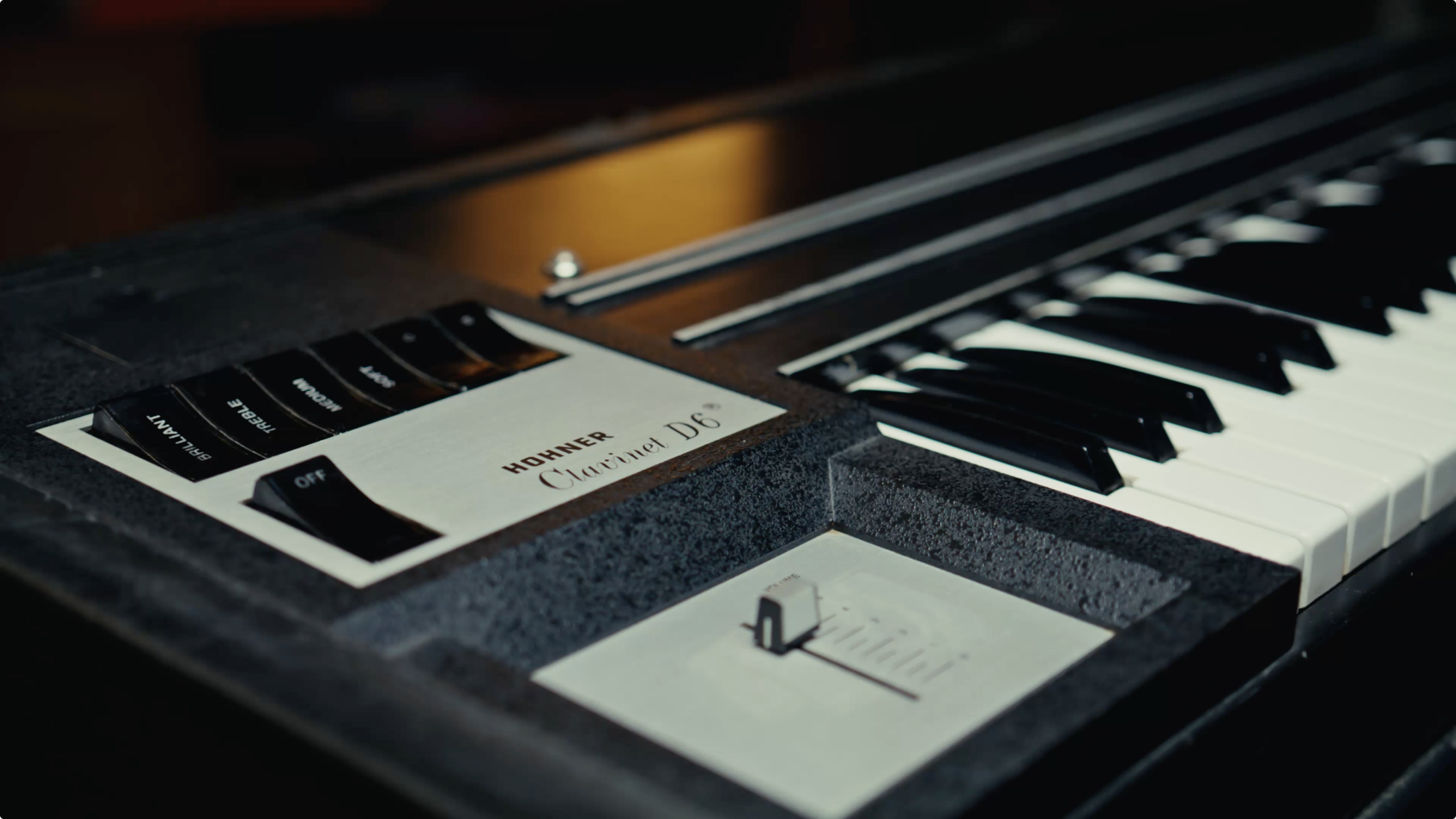
The Hohner Clavinet, manufactured in West Germany from 1964 to 1988, is still one of the most iconic electromechanical keyboards ever made.
Although often grouped with electric pianos, organs, and synthesisers, its design is deeply rooted in the Renaissance-era clavichord. In the early 1960s, inventor Ernst Zacharias modernised the traditional clavichord by replacing its soundboard with magnetic pickups, transforming a centuries-old design into a stage-ready instrument. The result was the Clavinet, an electromechanical keyboard that combines real vibrating strings with electric amplification to produce a bright, percussive sound more akin to an electric guitar than a piano.
How Does a Clavinet Work?
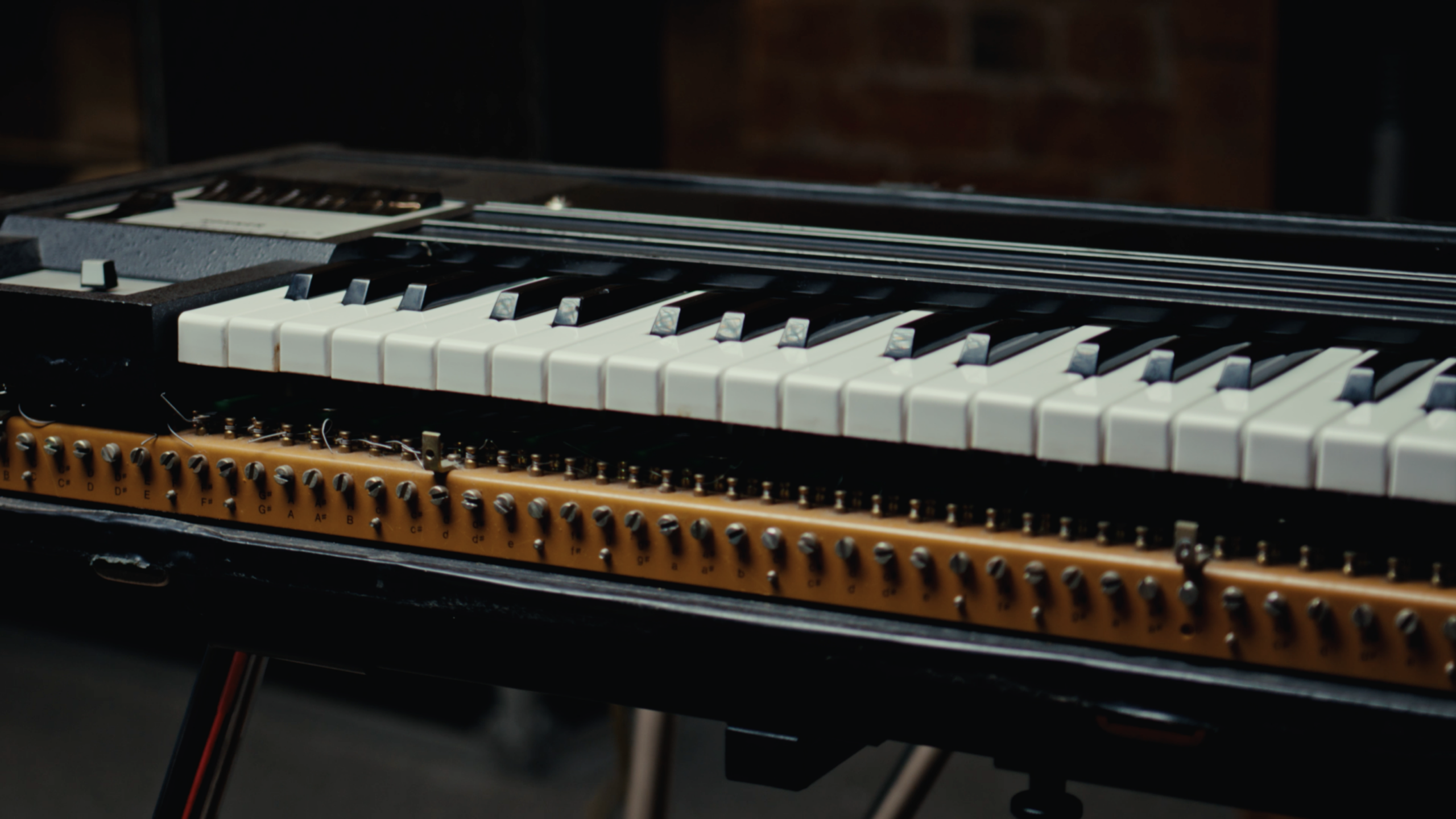
The Clavinet keyboard achieves its signature sound through an ingenious mechanical setup. When a key is pressed, a small rubber pad (called a tangent) under the string rises to pinch the steel string upward against a metal anvil. This action divides the string, setting one half into motion while the force of the key press directly influences the note’s volume and attack dynamics.
To keep the sound tight, yarn is wound around the non-vibrating end of each string. Whilst a key is held, the note rings freely over the pickup. The moment the key is released, the string drops off the anvil, and the yarn immediately dampens the entire string, stopping the note.
From there, two single-coil magnetic pickups near the bridge capture the vibrations. Because these pickups sit so close to the bridge, the instrument naturally has a bright, guitar-like bite. Players can switch the pickups in or out of phase to deliver either a razor-sharp bite or the classic, full-bodied combination that defined ’70s funk.
What Made the Clavinet So Distinctive?
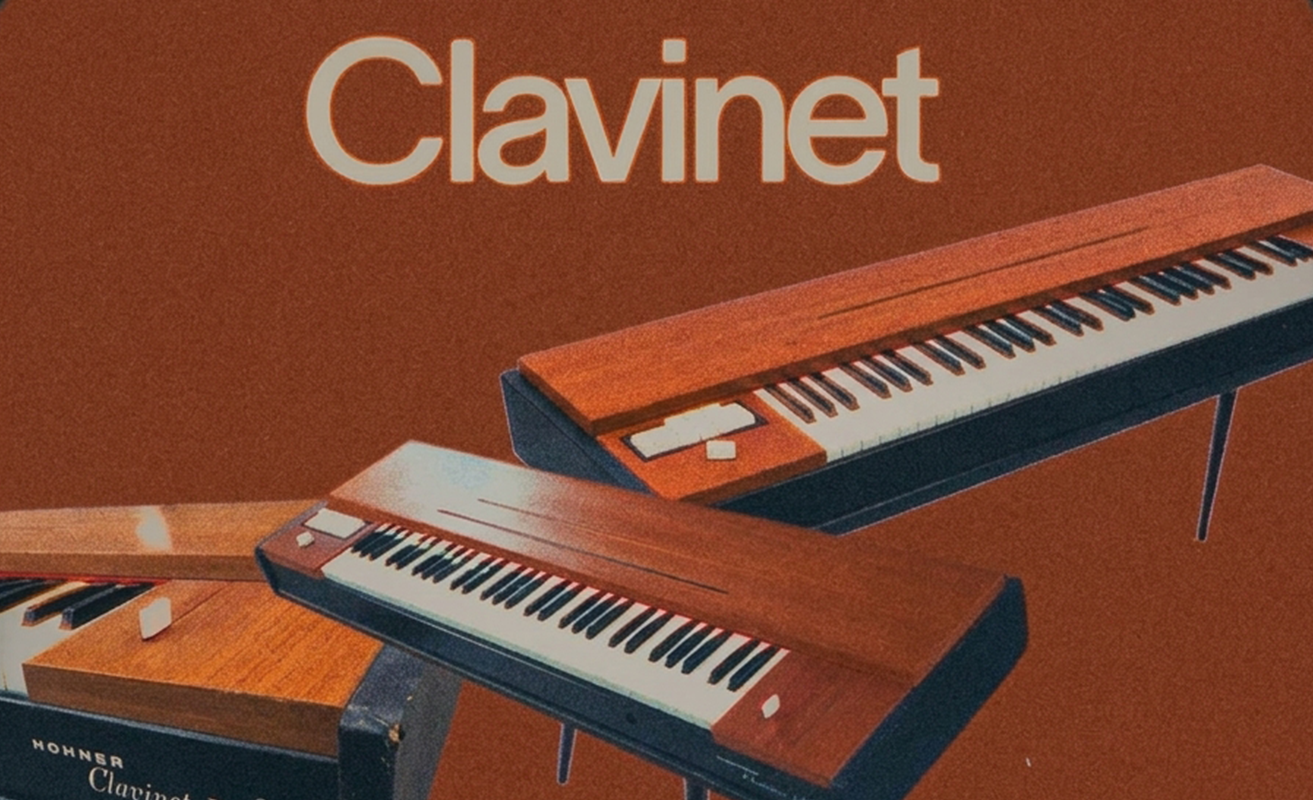
In the hands of artists such as Stevie Wonder, the Clavinet became more than just another keyboard. It could drive an entire song. Its ability to produce short, punchy notes gave keyboard players a role traditionally associated with the guitar: playing riffs, rhythmic stabs and repeating grooves that locked in with the bass and drums. For musicians coming from a piano or keyboard background, it opened up a completely different way to play and think about rhythm.
But the Clavinet was never limited to funk and soul. Its gritty, aggressive sound also found a home in rock. John Paul Jones used it to great effect on Led Zeppelin’s “Trampled Under Foot” where its sharp, guitar-like tone helped create one of the band’s most distinctive grooves.
Throughout the 1970s, the Clavinet appeared across rock, jazz fusion, reggae and disco, becoming one of the era’s most recognisable sounds.
The Musicians Who Elevated the Clavinet Sound

1968 | Stevie Wonder, one of the Clavinet’s earliest popular-music champions, used it on recordings including “Shoo-Be-Doo-Be-Doo-Da-Day” and explored its guitar-like rhythmic potential.
1969 | Garth Hudson / The Band brought the Clavinet into mainstream rock with “Up on Cripple Creek”, using a wah-wah pedal to create an unusually percussive, distinctive sound.
1971 | Billy Preston helped bring the Clavinet into mainstream funk and pop through prominent recordings such as “Outa-Space”
1972 | Stevie Wonder made the Clavinet one of the defining sounds of 1970s funk, during the pivotal era of “Superstition”
1975 | Pink Floyd used the Clavinet on “Have a Cigar”, incorporating it as a distinctive texture within progressive rock.
1975 | John Paul Jones / Led Zeppelin demonstrated the Clavinet’s potential as a hard-rock rhythm instrument, particularly on “Trampled Under Foot”
1977 | George Duke developed a highly individual approach to the Clavinet, including a custom pitch-bending whammy bar-equipped Clavinet. “Reach For It” became a defining example of his funk sound.
1977 | Steve Winwood used the Clavinet in a sharp, guitar-like rhythm role, locking in with the drums and bass to drive a punchy rock-soul groove, like on their record “Time Is Running Out”
Why People Still Want The Clavinet Sound
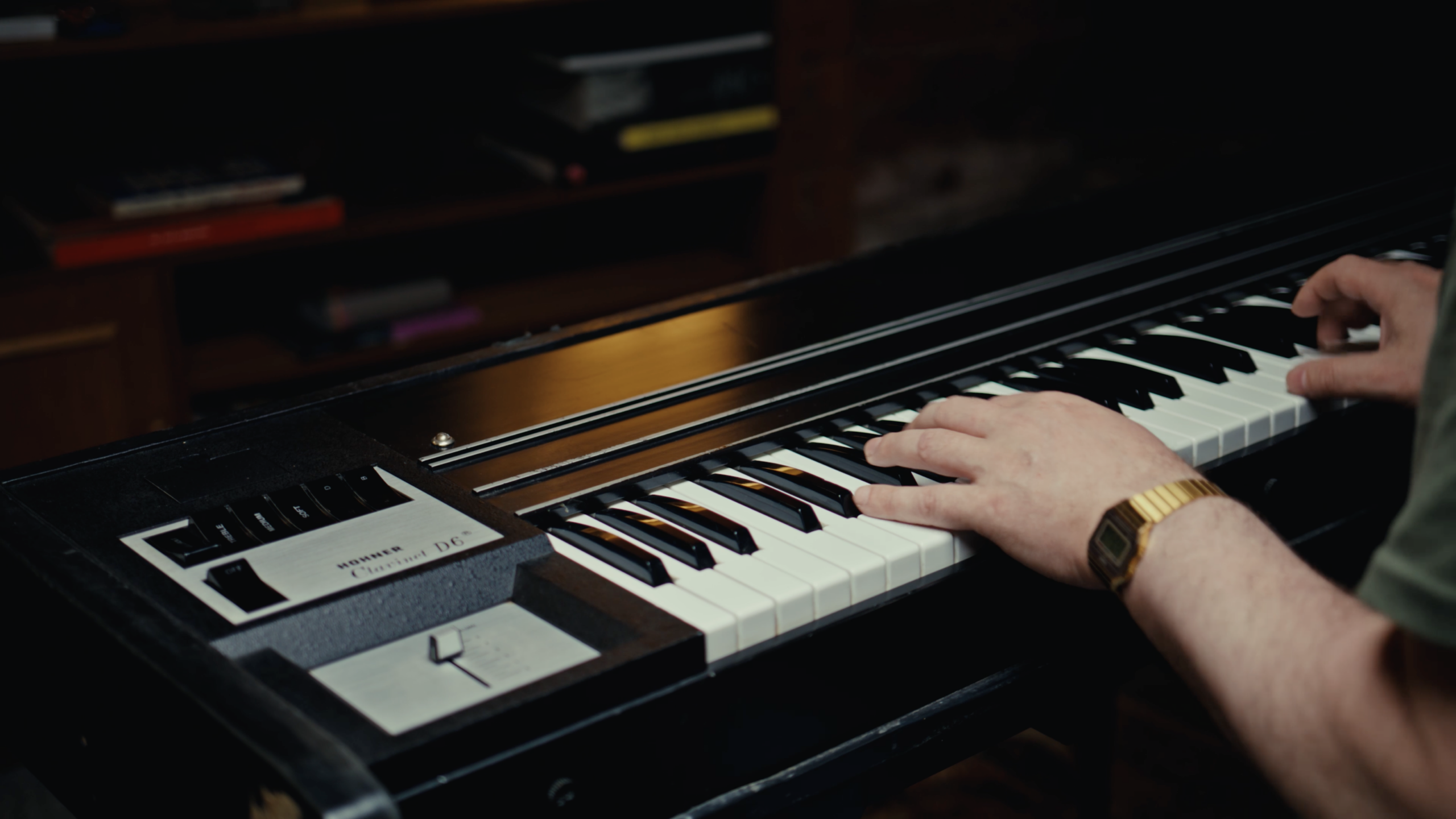
The Clavinet arrived in the right hands at the right time. Although it had existed since the 1960s, it truly found its place as funk exploded in the early 1970s, and its sound has never truly disappeared. Its influence can still be heard across modern music, whether played on the original instrument, recreated digitally (e.g the Rhodes Clav Pro) or sampled from classic recordings.
However, using vintage Clavinets is challenging because most original instruments are costly, rare, and require maintenance due to their age and mechanical components. Despite this, its distinctive percussive sound remains influential in modern pop, neo-soul, jazz fusion, R&B, and hip-hop. Artists and producers continue to seek its punchy attack and rhythmic edge to add energy and groove to their tracks. The Clavinet’s most significant legacy isn’t just its recognisable tone, but how it transformed keyboard players in bands into rhythmists and groove builders. It’s a generational sound people will always return to.
Bringing the Clavinet into the Modern Age
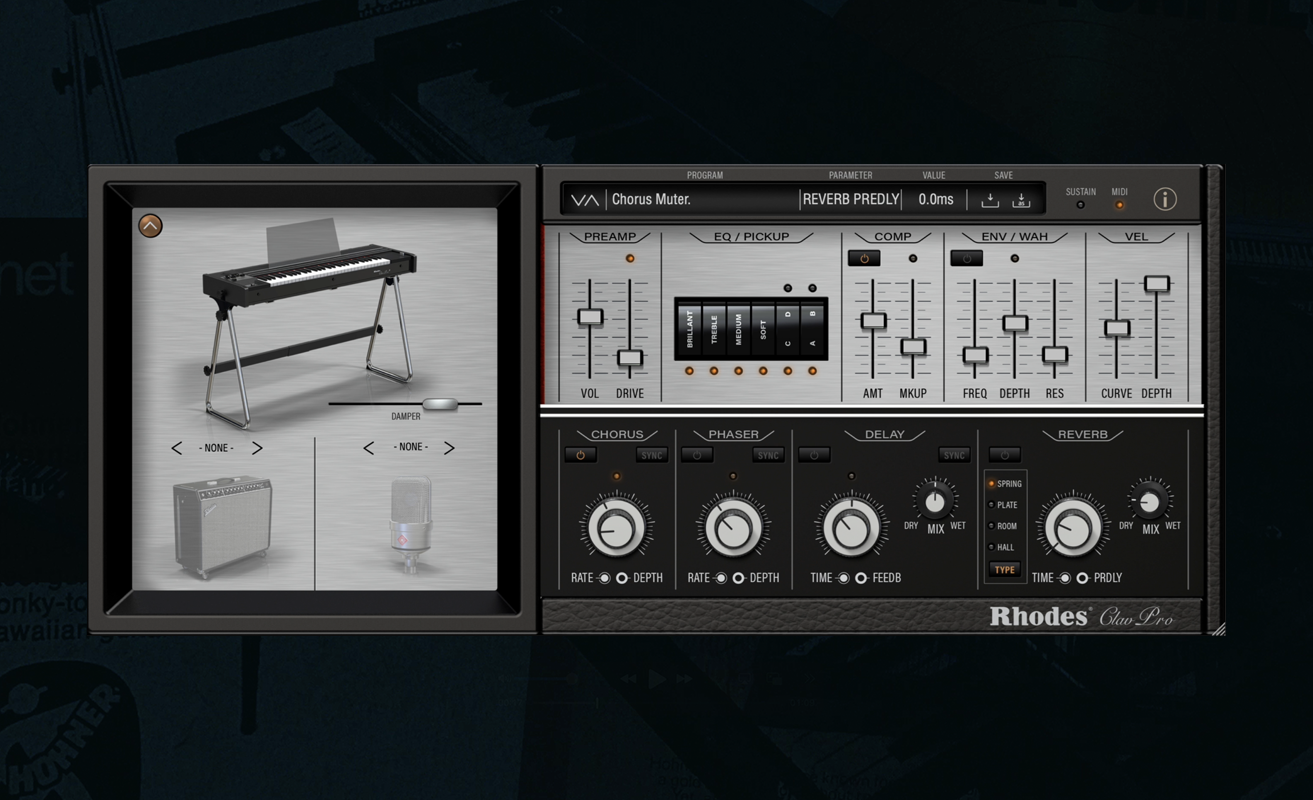
With the introduction of modern digital audio workstations (DAWs) and plugins, achieving the ideal sound has never been easier. Virtual instruments and VSTs have become a standard part of modern music production, giving musicians and producers access to a huge range of instruments directly from their studio.
At the same time, expectations of authenticity have shifted. Producers increasingly expect digital instruments to sound and respond like their real-world counterparts. While digital versions may never fully replicate the character and physical response of an original instrument, modern technology has become remarkably effective at reproducing these qualities.
Through precise sampling, thorough recording, and advanced modelling techniques, developers can accurately capture an instrument’s distinctive tonal qualities and playing response. This enables the integration of classic instruments like the Clavinet into contemporary production workflows without needing access to the original instrument.
Rhodes Electromechanical Heritage
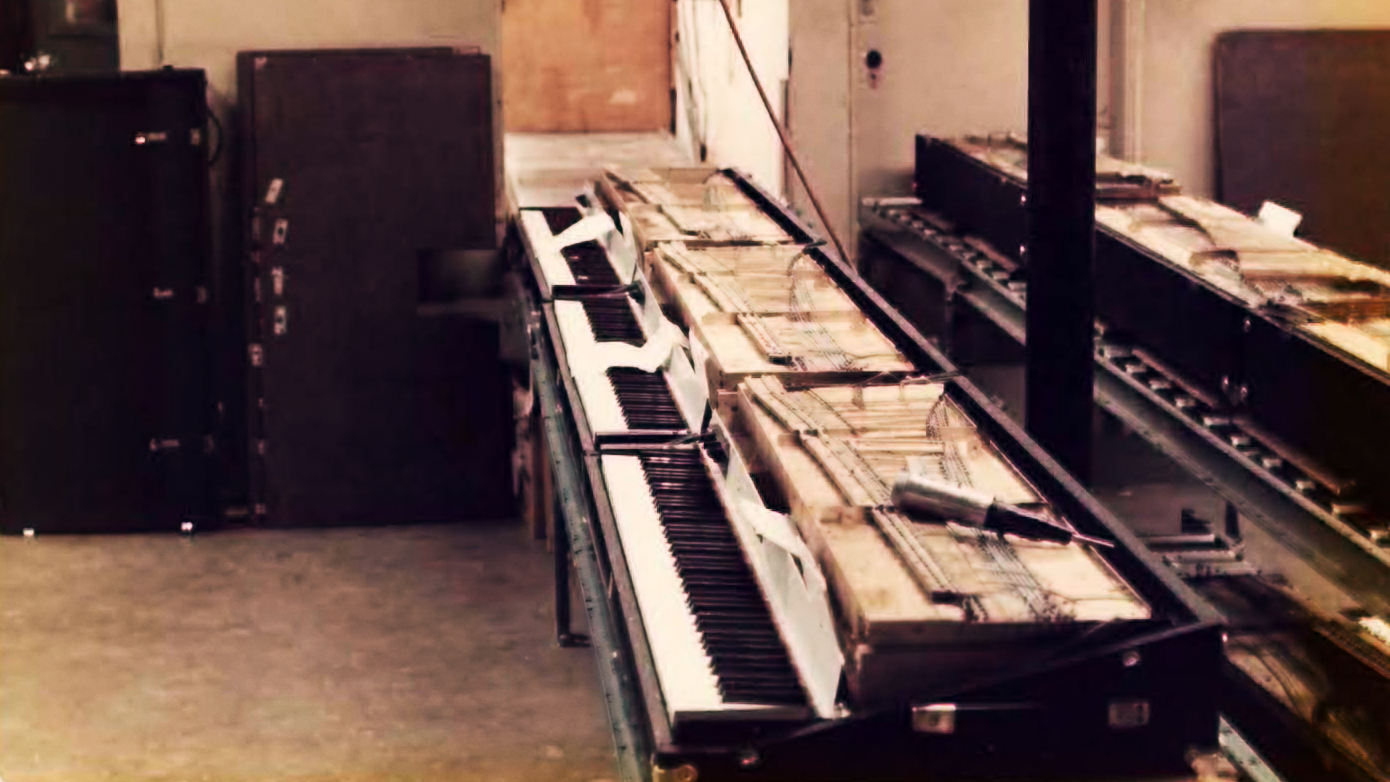
Rhodes has been at the forefront of electromechanical instruments since Harold Rhodes invented the original Rhodes Piano back in 1942. For more than 80 years, Rhodes instruments have become some of the most expressive, recognisable and influential electromechanical pianos ever made.
Today, that legacy lives on with the Rhodes MK8 Piano, an instrument designed not simply to recreate the past but to preserve the character, authenticity and musicality of the Rhodes piano while bringing it into the modern age.
Rhodes software mirrors the same philosophy. Rather than treating a plugin as simply a collection of samples or sounds, Rhodes places particular emphasis on recreating the physical behaviour and expressive response that makes an electromechanical instrument feel alive. This includes the nuances of the keyboard action, dynamics, and tonal response that contribute to an instrument’s individual character.
That expertise has helped shape an ever-expanding collection of Rhodes software instruments. From the V8 Pro, modelled on the Rhodes MK8, to the historic instruments represented in Anthology, including the Rhodes Mark I Stage 73, Sparkletop 73 and Rhodes MKV 73, this collection brings the character of generations of Rhodes instruments into the digital age.
These instruments are not intended simply to be software reproductions. They are designed to capture the sound, response, and musical behaviour of the originals, providing an authentic, playable experience that remains faithful to the instruments that inspired them.
The philosophy behind the Rhodes software range is to make the highest-quality, authentic, and expressive digital instruments accessible to anyone making music today.
Introducing The Clav Pro Virtual Instrument
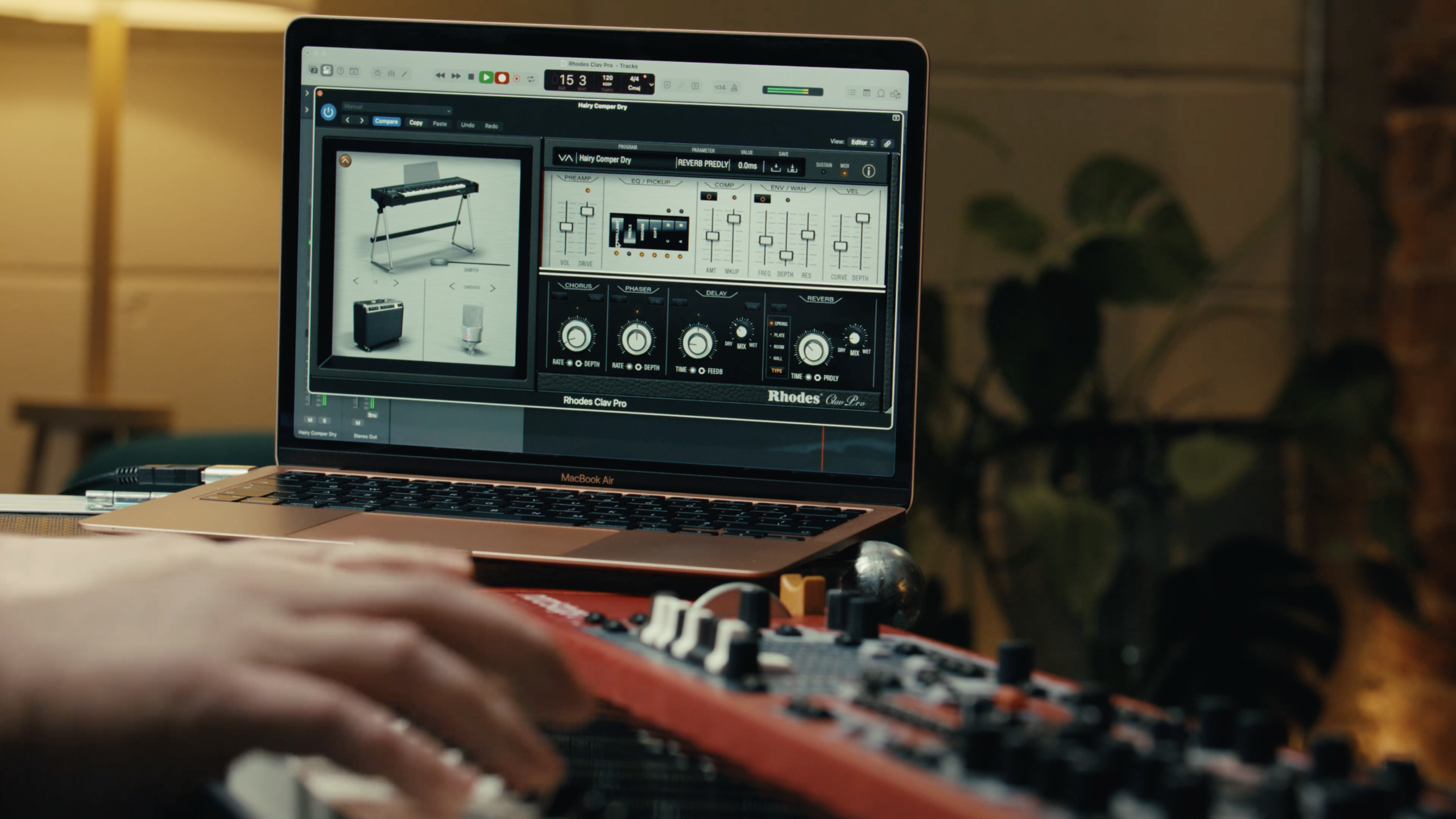
Rhodes Clav Pro shares the same ethos, harnessing Rhodes extensive experience in electromechanical keyboard design and instrument recreation to deliver another legendary virtual instrument. It preserves the original Hohner Clavinet D6’s unique character and musicality, allowing you to access vintage tones without the associated vintage costs. The plugin authentically recreates key aspects of the Clavinet’s distinctive character, including its mechanical response and pickup behaviour, so you can achieve that out-of-phase bite, and express yourself easily.
The Clavinet’s story is ultimately about more than a distinctive sound. It reminds us that the right instrument, in the right hands, can change how musicians approach an entire genre. From the grooves of Stevie Wonder to rock, jazz fusion and modern production, the Clavinet turned the keyboard into a powerful rhythmic instrument in its own right.
That is perhaps the real legacy of the Clavinet: it didn’t simply find a place in funk; it helped define what funk could sound like. And with virtual instruments like Rhodes Clav Pro, that legacy can continue to inspire a new generation of musicians and producers.
Download Rhodes Clav Pro this Black Friday month and save 30% now only: £59.95 / $89.95 / €69.95